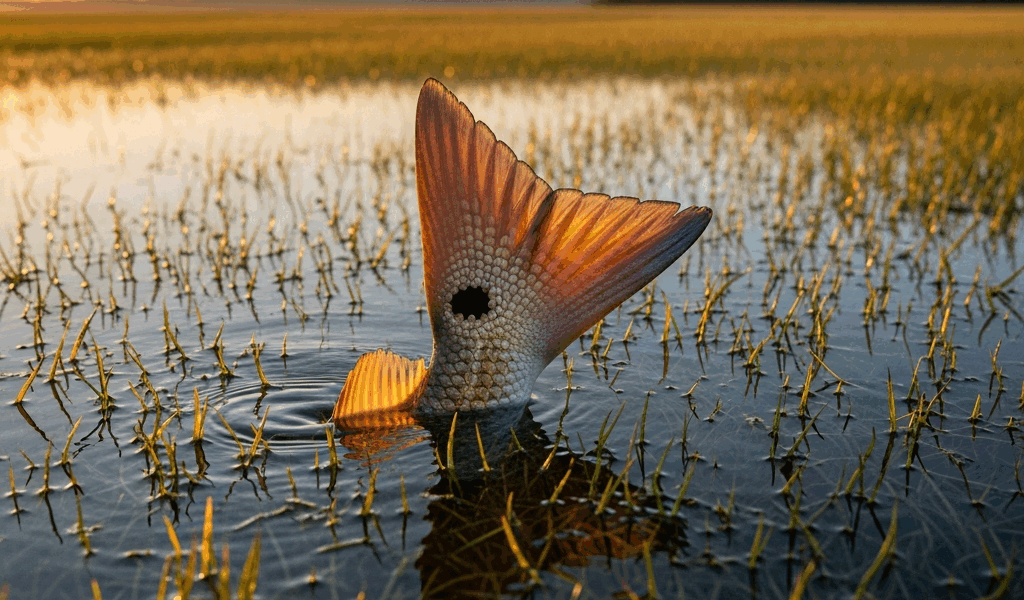
You are poling across a shallow grass flat at dawn and a bronze-colored tail breaks the surface 40 feet ahead. That is a redfish feeding head-down in six inches of water, and you have about five seconds to make the right cast before it moves. Redfish are one of the most accessible and rewarding inshore saltwater species — they eat aggressively, fight hard, and live in water shallow enough to see them. But timing, habitat, and rigging all matter more than most anglers realize.
Where Redfish Live and Why It Matters
Redfish (red drum) live in the inshore waters of the Gulf Coast and Southeast Atlantic — from Texas to the Carolinas and down through Florida. They inhabit grass flats, oyster bars, marsh drains, dock lines, and nearshore structure. The key to finding redfish is understanding that they follow their food, and their food follows the tide.
On grass flats, redfish feed on shrimp, crabs, and small baitfish that hide in the grass. They push onto the flats on incoming tides when rising water floods the grass and gives them access to prey that was unreachable at low water. This is when you see tailing fish — redfish feeding head-down with their tails out of the water, rooting through the bottom for crabs and shrimp.
On oyster bars, redfish cruise the edges looking for crabs and small fish that use the shells for cover. The transition from hard oyster bottom to soft mud or sand is the prime ambush point. Fish the edges, not the top of the bar.
In marsh drains and creek mouths, falling tides concentrate redfish in the deeper channels as water drains off the flats. Fish stack up at drain mouths, feeding on bait and crabs that get funneled through the narrowing water. Some of the best redfish fishing happens on the last two hours of a falling tide at a creek mouth — the fish know exactly where the food will be.
Tidal Timing: The Most Important Variable
Tides move redfish more than any other factor. Understanding tidal movement is the single biggest improvement most anglers can make in their redfish catch rate.
Incoming (rising) tide: redfish push onto grass flats, flood shorelines, and shallow bars. This is the best time for sight fishing on the flats. The fish move in with the water, feeding as they go. Concentrate on the leading edge of the flood — the shallowest water where new territory is becoming accessible.
High tide: fish scatter across the flooded flat. Harder to locate because they have maximum territory to roam. Work deeper potholes (sandy depressions in the grass flat) and structure edges where fish pause to feed.
Falling (outgoing) tide: the best overall tide stage for redfish. Fish funnel out of the flats and marshes through drains and creek mouths. Find the drain and you find the fish. The falling tide concentrates redfish in predictable locations, making them much easier to target than during high water.
Low tide: redfish hold in deeper channels, holes, and near dock pilings. Fewer fish are accessible, but the ones you find are concentrated and feeding. Good for structure fishing around bridges and docks.
Rigging for Slot Reds
Slot-size redfish (18 to 27 inches in most states) are the bread and butter of inshore fishing. They are aggressive feeders, strong fighters, and respond well to both artificial and live bait.
Best artificial: a gold or copper spoon (Johnson Silver Minnow 1/4 oz or Redfish Magic) weedless-rigged is the simplest and most effective redfish lure in shallow water. Cast it ahead of a tailing fish, let it flutter down, and retrieve with a slow, steady pull. The flash triggers an aggressive strike. Soft plastic paddletail swimbaits (3 to 4 inches) on a 1/8 to 1/4 oz jighead work the same water and let you vary the retrieve speed and depth.
Best live bait: live shrimp under a popping cork is the most productive rig for anglers who want to catch fish rather than practice casting. Set the cork 18 to 24 inches above a #1/0 circle hook, hook the shrimp through the horn (the spike on the head), and pop the cork every 10 to 15 seconds. The popping sound imitates feeding fish and draws redfish from distance. Circle hooks are essential with live bait — they hook in the corner of the mouth and make release clean.
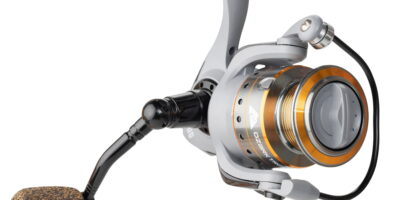
Tackle: 7-foot medium power fast action spinning rod, 2500 to 3000-size spinning reel, 10 to 15-pound braided line with 20-pound fluorocarbon leader. This setup handles slot reds up to 27 inches and the occasional overslot fish without being overkill. The braid-to-fluoro connection gives you the sensitivity of braid with the abrasion resistance of fluorocarbon near structure.
Rigging for Bull Reds
Bull reds are mature redfish over 27 inches — 30 to 50 inches and 15 to 50 pounds. They school in nearshore waters, around passes, and on deeper flats. The tackle upgrade from slot reds is significant.
Rod: 7-foot to 7-foot-6-inch medium-heavy to heavy power fast action spinning or conventional rod. Bull reds make sustained runs and you need the backbone to turn them before they reach structure or oyster bars that will cut your leader.
Reel: 4000 to 6000-size spinning reel with a strong drag system (15+ pounds of drag). Conventional reels work well for bait fishing from a stationary position — the lower gear ratio and higher drag capacity handle big fish more comfortably.
Bait: Cut mullet or cut ladyfish on a circle hook (7/0 to 8/0) fished on the bottom with a fish-finder rig is the standard bull red setup. Cast to known channels, passes, or structure and wait. Bull reds feed heavily during fall runs (August through November in the Gulf) and they are not subtle — the rod bends over and line peels off the reel.
Line: 30 to 50-pound braid with 40 to 60-pound fluorocarbon leader. The heavier tackle is not about the fish’s weight — it is about stopping a 40-inch fish before it reaches the nearest bridge piling or oyster bar. In open water, you could land a bull red on lighter tackle. Near structure, you cannot afford to give them an inch.

Stay in the loop
Get the latest saltwaterspots.com updates delivered to your inbox.