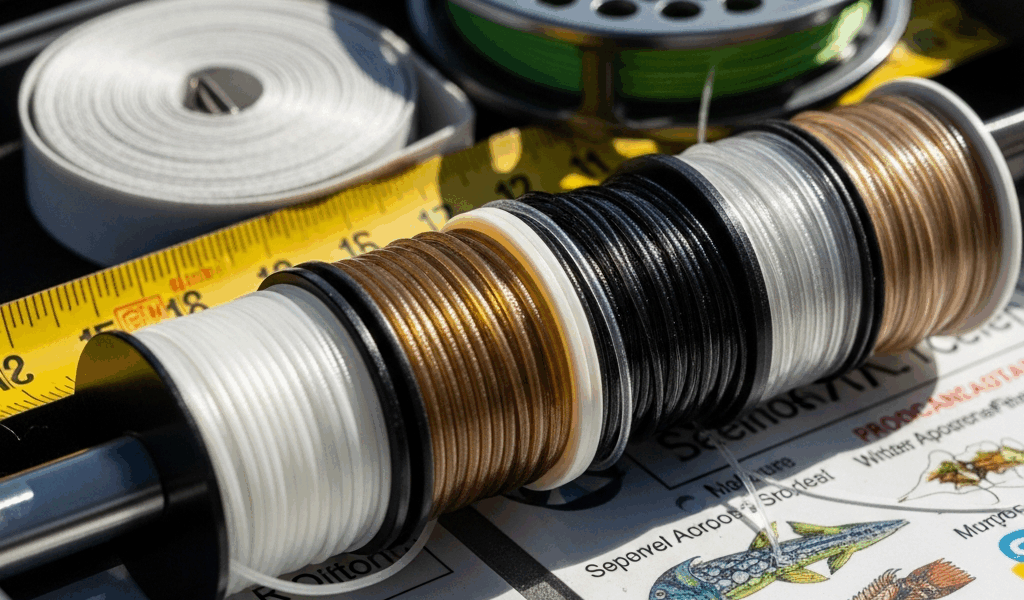
Why Leader Length Actually Matters in Saltwater
Saltwater fishing has gotten complicated with all the gear marketing and contradictory advice flying around. But fluorocarbon leaders? That’s one thing worth cutting through the noise for — because the stakes are real.
A fluorocarbon leader isn’t just a marketing term someone invented to sell you more stuff at the tackle shop. It solves three actual problems that regular monofilament doesn’t touch: abrasion resistance against oyster shells and barnacles, near-invisibility in clear water, and shock absorption that doesn’t telegraph a sudden line-diameter change to fish that have seen every trick in the book.
This article includes affiliate links. We may earn a commission at no extra cost to you.
Here’s what most articles skip entirely: longer is not always better. I learned this the hard way on the Homosassa flats — spent an entire afternoon watching redfish tail in six inches of gin-clear water while they absolutely ignored everything I threw. Three-foot fluorocarbon leader. The thing was so long and heavy it killed the natural presentation of my fly completely. That’s when it clicked. The confusion isn’t really about fluorocarbon itself. It’s about matching length and pound test to what you’re actually fishing. That’s it.
Salt water is hostile. Rough. Rocks, shells, seagrass, and the mouths of fish with serious teeth will shred regular monofilament fast. A leader absorbs the shock of a hard strike without snapping your whole rig. But oversize it and you create a different problem — it becomes visible, it fights castability, and it defeats the purpose entirely.
The real framework here isn’t vague. Three variables: water clarity, target species, and whether you’re throwing spinning gear, fly, or surf tackle. Get those right, and you’ll know exactly what pound test and length to spool up. So, without further ado, let’s dive in.
Matching Pound Test to Your Target Species
Pound test is about durability and jaw size — not aggression, not how mean the fish looks in a photo. A 15-pound leader won’t stop a big tarpon from running. Your main line handles that. The leader just needs to survive the trip through the guides, the initial head shake, and whatever abrasive surfaces sit between you and a fish that does not want to come in.
Light Inshore — Trout, Flounder, Small Permit
Use 15–20 pound fluorocarbon. Main line can be 12–15 pound braided. The water is often clear or slightly stained, and the fish are line-shy — genuinely spooky in ways that will frustrate you if you’re not ready for it. I’ve watched a redfish ghost a Clouser minnow the instant a 30-pound leader slapped the water in gin-clear conditions. Just vanished. Not worth the risk. Stick with 15–20 pounds and sleep fine.
Redfish, Snook, Tarpon (Inshore)
Jump to 20–30 pound fluorocarbon. Main line is probably 20–30 pound braid. These fish are stronger and have rough mouths — a redfish buried in mangrove roots will cut 15-pound fluorocarbon without flinching. Snook have gill plates sharp enough to saw through leader material, honestly. A tarpon’s mouth is basically armored. Thirty-pound won’t kill your presentation in stained water, which is where most of these fish hunt anyway. That’s what makes that 20–30 pound range endearing to us inshore anglers. A reliable option here is Seaguar Blue Label fluorocarbon leader in 25-yard spools — it’s the standard most inshore anglers trust for braid-to-leader connections.
Sharks, Large Tarpon, Permit in Difficult Structure
Forty to 80 pounds. Beach sharks? Use 60–80 pound. Tarpon tournament where hook-ups are everything? Forty to 50 is your floor. These fish break things. A tiger shark treats 40-pound leader like dental floss — accept that reality, upgrade, and fish with actual confidence instead of holding your breath every time something big eats.
Here’s the rule nobody talks about directly: your leader should always be heavier than your main line by at least 20–30%. The knot joining them is the weak point. Same-strength main line and leader means your main line breaks first. That’s backwards. You want the leader to fail if something has to give — not your entire reel setup.
How Long Should Your Fluorocarbon Leader Be
Probably should have opened with this section, honestly. Leader length changes entirely depending on your setup and conditions, and most people get this wrong before they even worry about pound test.
The 18–24 inch rule exists for a reason. That’s the standard for spinning setups — it’s roughly the combined length of most rod guides. When you strip in, the entire leader passes through those guides multiple times per cast. Too long and it tangles. Too short and your main line is rubbing against guide edges on every cast, shortening its life quietly until something breaks at the worst possible moment.
Spinning Setups
Eighteen to 24 inches. Non-negotiable — at least if you’re throwing a 7-foot rod or shorter. Running an 8-footer? You can push to 24 inches. Beyond that, the knot hits your guide and jams. Don’t make my mistake of thinking an extra few inches won’t matter. It does.
Stained Water or Low-Light Dock Fishing
Go longer. Twenty-four to 36 inches. Visibility drops in stained water, so a slightly longer leader doesn’t spook anything. It actually helps — more cushion before the main line enters the strike zone. Fish that can’t see three feet away won’t notice the braid-to-fluorocarbon transition regardless.
Jigging in Structure or Around Pilings
Thirty-six inches minimum. When your jig is bouncing bottom near a piling five feet away, a short leader is a liability. A fish wrapping into structure will snap it immediately. The longer leader absorbs the angles — gives you a fighting chance instead of a clean break and a lost rig.
Fly and Surf Rigs
Follow the rod-length rule. Your leader should be roughly as long as your rod. A 9-foot fly rod gets an 8–9 foot leader. A 10-foot surf rod gets 10–12 feet of leader built into the rig. Yes, that seems long compared to everything above. Fly and surf are different animals entirely. The leader is part of the casting system — not just a shock absorber you bolt on at the end.
When You Are Losing Fish or Getting Bite-Offs
Losing fish is diagnostic information. Not random bad luck, not the fish gods punishing you — each failure mode has a specific fix.
Clean Bite-Offs with Teeth-Bearing Fish
You need a bite tippet. But what is a bite tippet? In essence, it’s a short section — 6 to 12 inches — of heavy mono or light wire tied above your fly or lure. But it’s much more than that; it’s the piece that sacrifices itself so your whole rig doesn’t. Use 40–80 pound mono, or 30–40 pound single-strand stainless steel wire. Tarpon, sharks, and pike will cut fluorocarbon clean. Replace the bite tippet every three fish.
Fish Spooking Before the Strike
Your leader is too heavy or too short. Drop the pound test by 5–10 pounds. Add 6–12 inches to the length. Cast from farther away. Fish early morning or late evening when light is low. The combination of lighter, longer leader and better timing solves this — probably 80% of the time, in my experience.
Knot Failures
I’m apparently terrible at tying knots under pressure, and the FG knot works for me while the double uni never quite holds the same way. Most anglers tie both wrong. The FG knot needs at least eight wraps per side. Double uni needs five wraps minimum. Test your knot by hand before you fish. Pull hard. If it slips, retie it. Thirty seconds now instead of a lost fish later. Don’t make my mistake of skipping this step when you’re rushing to get lines in the water.
Quick Reference — Leader Setup by Situation
- Clear Flats (Bonefish, Permit, Trout): Main line 12–15 lb braid | Leader 15–20 lb fluorocarbon | Length 20–24 inches
- Redfish, Snook (Inshore): Main line 20 lb braid | Leader 25–30 lb fluorocarbon | Length 24 inches
- Tarpon (Light Tackle): Main line 20–30 lb braid | Leader 40–50 lb fluorocarbon | Length 24–30 inches | Add 40 lb mono bite tippet
- Sharks, Jacks (Beach/Nearshore): Main line 30–50 lb braid | Leader 60–80 lb fluorocarbon | Length 30–36 inches | Use 60 lb mono or wire bite tippet
- Stained Water Jigging: Main line 20–30 lb braid | Leader 30–40 lb fluorocarbon | Length 36 inches
- Fly Fishing (9-ft Rod): Main line 20 lb braid or fly line | Leader 8–9 feet tapered to 15–20 lb tippet | No bite tippet unless targeting teeth-fish
Bookmark this. Print it out and shove it in your tackle bag. The specifics matter more than the gear — more than the rod brand, more than the reel, more than the lure color everyone swears by. Get the leader right, and you stop standing on the bow wondering why fish keep getting off.

Stay in the loop
Get the latest saltwaterspots.com updates delivered to your inbox.