How to Clean Saltwater Fish — From Catch to Cooler in 10 Minutes
Cleaning saltwater fish has gotten complicated with all the conflicting advice flying around. As someone who’s been working the Gulf Coast for going on twenty-two years — redfish in the marsh, snapper on the ledges, flounder in the passes — I learned everything there is to know about what happens between the landing net and the dinner plate. And I still watch guys at the cleaning station making the exact mistakes I made back when I had no idea what I was doing. Hacking through rib cages. Skipping the bleed. Tossing fish straight into a dry cooler like they’re packing leftovers. This is the guide I wish existed when I started — and it goes a lot deeper than the “cut behind the gills” advice you’ll find basically everywhere else.
This article includes affiliate links. We may earn a commission at no extra cost to you.
General Cleaning Steps — Every Saltwater Fish
Before any species-specific stuff, there’s a baseline process that applies to every saltwater fish going into your cooler. Get these wrong and it doesn’t matter how clean your fillet technique is — the fish will taste off. Every time.
Bleed the Fish First
The single most impactful thing you can do is bleed the fish immediately after landing. Cut the gill arches on both sides, drop the fish into a bucket of saltwater, and wait two to three minutes. That’s the whole step. Blood is what causes that strong fishy flavor and the grayish color you sometimes see in the meat. A properly bled snapper fillet looks almost white. An unbled one looks like something went sideways. Don’t make my mistake — I skipped bleeding for years because nobody told me it mattered, and every fillet I produced tasted stronger than it had any reason to.
Scale or Skin — Know the Difference
Not every saltwater fish gets scaled. Snapper and grouper have scales worth removing if you’re cooking skin-on. I use a Rapala Fish N Fillet scaler — runs about $8 at most tackle shops — working tail to head against the grain. Redfish skin is thick and technically edible, but a lot of people skip it because the flavor it carries is intense. Flounder skin is delicate and some folks leave it on entirely. More on that below.
The Basic Fillet Process
- Bleed first, always.
- Rinse the fish in clean saltwater or fresh water.
- Scale if cooking skin-on, skip it if you’re skinning out the fillet.
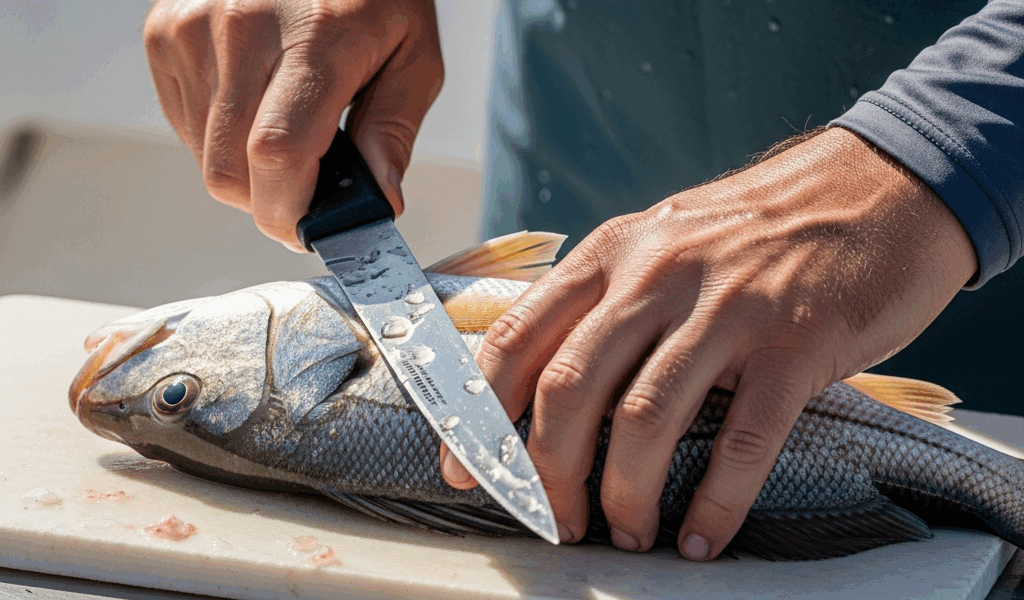
- Make your entry cut just behind the pectoral fin down to the spine.
- Run the blade along the spine toward the tail using long, smooth strokes.
- Work around the rib cage — never through it.
- Remove the skin by pressing the fillet flat and running the knife between skin and meat at a shallow angle.
- Trim the bloodline and any dark meat along the lateral line.
- Rinse, pat dry, and bag or ice immediately.
Once you’ve done this fifty times, the whole process runs under three minutes per fish. Two fish at once and you’re under ten minutes total — start to finish.
Species-Specific Filleting — Snapper, Redfish, Flounder, Grouper
Here’s where most online guides fall apart. They treat every fish like it’s a largemouth bass pulled from a suburban pond. Saltwater fish have wildly different bone structures, skin thicknesses, body shapes — your technique has to adapt, or you’re leaving yield on the table every single time.
Red Snapper
Snapper is a round-body fish with a relatively large rib cage and thick, firm meat that holds up well to a fillet knife. But what is the critical technique with snapper? In essence, it’s the blade angle on that initial spine cut. But it’s much more than that — you want the knife nearly flat, maybe five degrees off horizontal, so you’re riding the spine rather than dipping into it. Dip too low and you’ll nick the bone and feel drag on every stroke. Get the angle right and the knife glides clean. Use a flexible 7.5-inch fillet knife for snapper under three pounds — step up to a 9-inch semi-flex or rigid blade for anything bigger. The ribs on larger snapper are prominent. Make a deliberate arc around them rather than trying to force through. Rushing that section costs you yield.
Redfish
Redfish have thick, tough skin and a very distinct bloodline running along the lateral line — that dark red strip carries a strong, muddy flavor that a lot of people mistake for the fish itself tasting bad. It’s not the fish. It’s the bloodline you left on. Trim it out entirely — go about a quarter inch on either side of that strip and remove it completely. Redfish also respond beautifully to the “half shell” technique if you’re grilling — score the skin side, leave the scales on, cook scale-side down. The scales act as a natural barrier and the meat steams inside. That’s what makes redfish so endearing to us Gulf Coast regulars. For clean fillets, though, skin off and bloodline out is the move.
Flounder — The Different One
Flounder trips up new anglers more than any other fish on this list. It’s a flat fish with a completely different body plan — two fillets per side, four fillets total off a single fish. Make your first cut straight down the lateral line from head to tail, then run the blade outward toward the fin line, keeping it parallel to the fish’s body. You’re essentially peeling the meat off the skeleton in two panels per side. Flounder meat is delicate and tears easily — slower is genuinely better here. A 7-inch flexible blade works better than anything rigid. Apparently a lot of people are surprised by how much meat comes off a flounder once they get the technique right — a two-pound fish gives you four clean pieces of beautiful white meat.
Grouper
Grouper is the big one — literally and figuratively. Gag grouper and red grouper both have thick, dense fillets with a large central bone structure. For anything over five pounds, a flexible knife actually works against you. You want a semi-rigid 9-inch blade so you have control over the full length of the cut. The skin on grouper is tough — not worth keeping. Make your spine cut deep and deliberate, follow the ribs with a clean arc, then flip the fillet and use a firm pressing motion to run the skin off. Grouper has a much milder bloodline compared to redfish, but trim it anyway. The meat should come out bright white throughout when you’re done right.
Cleaning on the Boat vs At Home
Probably should have opened with this section, honestly — because your workspace setup determines how efficiently everything else goes.
On the Boat
Cleaning fish on the water means you need a dedicated cutting board that won’t slide. I zip-tie a Ranger 24-inch poly cutting board to the gunwale rod holder rail — $22 at Bass Pro, been using the same one for three seasons. Keep a spray bottle filled with saltwater to rinse the board between fish. Your knife needs to be sharp before you leave the dock. Bring two: one 7.5-inch flexible and one 9-inch semi-rigid. A sharpening steel takes up almost no space and absolutely earns its keep on long trips. Dispose of carcasses legally — most states require tossing them in open water away from shore, not the marina. Check your state regs before you head out.
At Home
At home you have real options. A dedicated fish cleaning table with a hose hookup is the ideal setup — Fish Mate makes a solid folding model that runs around $65. Processing more than twenty fillets? An electric knife earns its keep fast. The American Angler PRO electric fillet knife with the 10-inch blade handles grouper and large snapper without the hand fatigue you’d get going manual. For smaller fish and precision work, stick with a hand knife like the Dexter-Russell Sani-Safe 7-inch fillet knife. Set up near a drain, use a trash-bag-lined bucket for carcasses, and rinse constantly. Cold water from the hose keeps fillets firm while you work — small detail, makes a real difference.
How to Keep Fish Fresh Until You Clean Them
The fillet is only as good as the handling between catch and cleaning table. Everything else is downstream of this.
The Ice Slurry Method
A dry ice cooler is not cold enough — full stop. You want an ice slurry — ice plus enough saltwater to create a slushy mixture that surrounds every fish completely. The slurry pulls heat out of the fish roughly three times faster than dry ice contact alone. Use a 2:1 ratio of ice to fish by weight. A 54-quart Yeti or equivalent cooler handles about 15–20 pounds of fish comfortably with proper ice coverage. Pre-chill the cooler with ice for thirty minutes before the trip if you can manage it.
When to Gut on the Boat
On day trips under four hours, bleeding and icing is enough. On longer offshore runs — eight hours, overnight trips — gut the fish on the boat. The gut cavity holds heat and bacteria even in a well-iced cooler. Remove the entrails, rinse the cavity, put the fish back in the slurry. This is non-negotiable on warm days above 85°F — the kind of July afternoon that makes you question your life choices out on the water.
Time Limits
- Properly bled and iced fish — 48 hours before quality starts dropping noticeably
- Ungutted fish on a long trip — quality degrades in as little as 8 hours
- Fish in a dry cooler without slurry — clean within 4 hours or accept the consequences
Common Mistakes That Ruin Good Fish
Every one of these I’ve either done myself or watched someone do at the cleaning station — usually while wincing from about ten feet away.
Not Bleeding Immediately
Already covered this above, but it bears repeating because it’s honestly the highest-impact mistake on the list. The first five minutes after landing a fish matter more than anything you do at the cleaning table. Bleed it. Every single time. No exceptions.
Not Enough Ice
People chronically underestimate ice needs — it’s almost universal. If you can see the fish through the ice, you don’t have enough. Double what you think you need on hot days. Ice is cheap. Ruined fish is expensive — both the dollars you spent on the trip and the hours you burned catching it.
Cutting Through the Rib Cage
Pure technique problem. Forcing the blade through the ribs instead of arcing around them leaves bone fragments in the fillet and destroys the meat near the belly. Take the extra four seconds to make a clean arc. Your guests will notice — maybe not consciously, but they’ll notice.
Leaving the Bloodline
On redfish especially, but honestly true for most species — that dark lateral strip is the source of strong, off-putting flavor. It’s not the fish. It’s what you left on. Trim it completely. Run your thumb along the fillet after you think you’ve trimmed it and feel for any remaining dark tissue. Still there? Cut it out.
Washing Fillets Too Early
Rinsing fillets in fresh water before you’re done processing dries out the surface and speeds up bacterial growth — counterintuitive, but real. Rinse once, at the very end, right before bagging. Keep fillets cold and dry throughout the whole process, then give them one final rinse right before they go into a Ziploc or vacuum bag for the freezer.
Fishing is honestly the easy part. Cleaning is the skill that actually determines what ends up on the plate. Get the fundamentals right, learn the quirks of whatever species you’re targeting, and the rest of it takes care of itself.

Stay in the loop
Get the latest saltwaterspots.com updates delivered to your inbox.