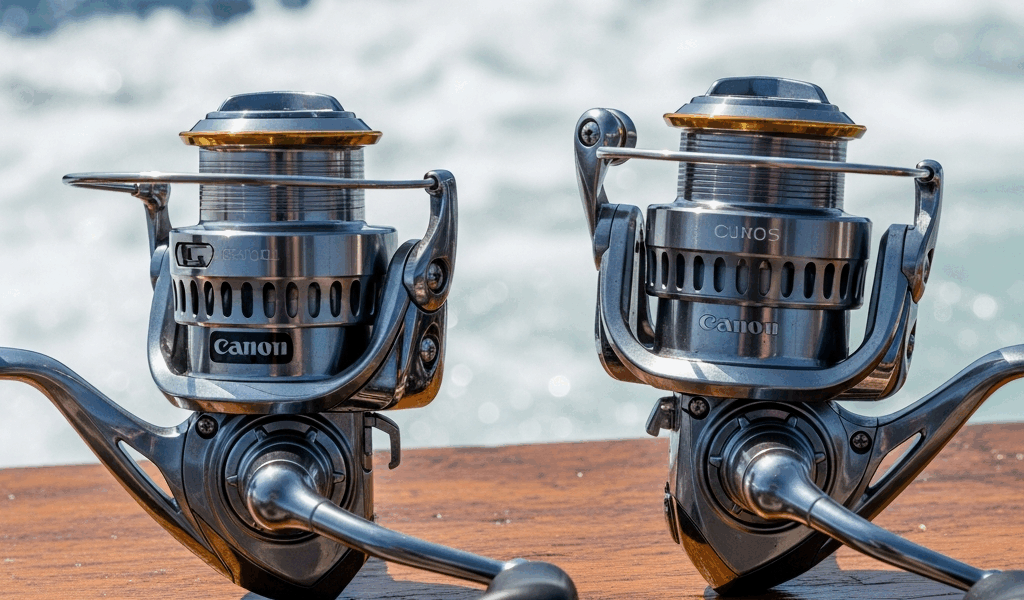
Quick Verdict — Which One to Buy
The Penn Battle III vs Daiwa BG debate comes up constantly in saltwater fishing forums, and after running both reels hard for the past two seasons — redfish on the Louisiana marsh, surf fishing the Gulf Coast, and pier duty with live bait — I can give you a straight answer instead of the usual “both are great, it depends!” cop-out.
Buy the Penn Battle III if you’re targeting heavier inshore species — redfish, snook, stripers — or if you’re throwing heavier jigs and soft plastics where drag pressure matters more than finesse. Buy the Daiwa BG if you want one reel that does everything reasonably well, especially if you’re mixing freshwater and saltwater use or fishing lighter presentations.
Specific size recommendations matter here, so here’s the short version before we dig into why:
- Penn Battle III 2500 — light inshore, flounder, trout
- Penn Battle III 4000 — redfish, snook, heavier inshore work
- Daiwa BG 2500 — versatile light tackle, great for finesse inshore
- Daiwa BG 4000 — surf and general-purpose saltwater
- Penn Battle III 6000 — pier and jetty with larger live bait
- Daiwa BG 5000 — offshore light tackle, mahi, smaller tuna
The Penn Battle III runs around $89–$109 depending on size and retailer. The Daiwa BG sits in a similar range, typically $79–$99. Neither will break the bank. But they are genuinely different tools, and buying the wrong one for your fishing style is a mistake I made personally before figuring this out the hard way.
Build Quality and Drag System Compared
Frustrated by a reel that felt gritty after one season of marsh fishing, I started pulling apart the Penn Battle III 4000 on my workbench to understand what was actually going on inside. That’s when the difference between these two reels became real to me.
The Penn Battle III Body
Penn built the Battle III with a full metal body, side plate, and rotor. The frame is aluminum alloy, and it’s machined with noticeably tighter tolerances than the Battle II. That matters in saltwater because flex in a reel body under load causes wear — fast. I’ve had cheaper reels develop a subtle wobble after a summer of use because the body wasn’t rigid enough to hold the gearing in alignment. Penn solved that here.
The HT-100 carbon fiber drag washers are the headline feature, and they earn the hype. Penn rates the Battle III 4000 at 20 pounds of max drag. In practice, you’re getting smooth, consistent pressure all the way up to the top of that range. Fighting a 10-pound redfish and cranking the drag knob during the fight — a terrible habit, but we all do it — the drag adjusts cleanly without that sticking-then-releasing sensation you get from cheaper systems.
One honest downside — the Battle III is not sealed. Penn’s IPX5 sealed system doesn’t show up until you step up to the Clash or Torque lineup. The Battle III has felt seals on the line roller and a water-resistant design, but it’s not waterproof. Dunk it repeatedly and eventually saltwater finds its way into the gearing.
The Daiwa BG Body
Daiwa’s BG uses an aluminum Zaion body — which is their term for a high-density carbon composite — on the body but keeps aluminum for the side plate and rotor. It’s lighter than the Penn. Noticeably lighter. The BG 3000 weighs about 8.5 ounces compared to the Battle III 3000 at 9.9 ounces. Over a full day of casting, that difference is real.
The ATD drag — Automatic Tournament Drag — is Daiwa’s proprietary system, and it works differently than the HT-100. The ATD uses a lighter, more progressive feel at lower settings that transitions to firm pressure as you increase drag. It’s rated at 17.6 pounds on the BG 3000. Slightly lower than Penn on paper, but the feel is excellent — maybe smoother at light settings, which is why I prefer the BG for trout and flounder fishing where I’m keeping drag loose to avoid tearing hooks.
Probably should have opened with this section, honestly, because the drag difference is the real story of why these reels appeal to different anglers. Penn is raw, confident drag power. Daiwa is smooth, graduated control.
Corrosion Resistance
Both reels hold up reasonably well with proper rinsing after every use. I rinse with freshwater, light lube on the line roller once a month, and grease on the main shaft seasonally. Under that maintenance schedule, my BG 4000 is now in its second full season without any notable corrosion. The Penn Battle III 4000 I’ve had longer — going on three years — and the exterior finish shows more wear, small pitting on the bail wire after heavy surf exposure. The bail wire on the Penn is a weak point. It’s functional but shows corrosion faster than the rest of the reel.
On the Water — Casting and Retrieval
Build quality tells you something. Actually fishing tells you more.
Line Lay and Casting Distance
The Battle III has a newer oscillation system compared to the Battle II, and it shows. Line lay is notably more even, which matters when you’re spooling 20-pound braid and want consistent casting distance. Uneven line lay creates friction at the guide during the cast. The Battle III lays line well across the entire spool width.
The Daiwa BG has a slight edge in casting feel. The lighter rotor means less rotational inertia, and on long casts — particularly into wind on the surf — the BG feels like it gets a little more out of each cast. It’s not dramatic. But it’s there.
Bail Wire
This is where Daiwa wins clearly. The BG bail wire is thicker, heavier gauge, and seats more solidly than the Penn. I’ve bent a bail wire on a Penn Battle II after a bad rod drop. Haven’t had that problem with the BG. The bail trip on the Daiwa is also crisper — it snaps into place and stays there. Penn’s bail is functional but feels cheaper relative to the rest of the reel.
Smoothness Under Load with Braid
Spooled both reels with 20-pound PowerPro braid, no mono backing, straight to spool with a braided line knot. Under load — specifically cranking a 1-ounce jighead against a hard-running redfish — the Penn Battle III feels more planted. More mechanical. The retrieve is smooth but has a slight mechanical authority to it that I actually prefer for power fishing. The Daiwa BG is silkier. Less mechanical feedback. Better for finesse applications where you want to feel subtle bites through the retrieve.
Soaked by a hard storm during a pier trip last October, I noticed the Battle III retrieved fine immediately after — a little gritty feeling that evening, but back to normal after rinsing. The BG handled the same conditions without any issue. Neither reel failed, which is the important thing.
Best Size for Each Type of Fishing
Reel size recommendations matter as much as brand choice. A 2500-size reel on the surf is miserable. A 6000 on a light inshore rod is comical. Here’s how I’d match these reels to actual fishing scenarios.
Light Inshore — Trout, Flounder, Small Redfish
Go with the Daiwa BG 2500 here. The lighter weight, smoother ATD drag at low settings, and finesse-friendly retrieval make it the better choice for presentations where you’re working 1/4-ounce jigheads and soft plastics. Pair it with a 7-foot medium-light rod and 15-pound braid. The Penn Battle III 2500 is fine in this role, but the BG is better.
Heavy Inshore — Redfish, Snook, Stripers
The Penn Battle III 4000 wins here. The full metal body, HT-100 drag, and higher max drag rating (20 pounds) give you the backbone to stop a big red in a grass flat before it tangles you. The BG 4000 would handle this too, but I trust the Penn more in situations where I’m locking down the drag and pulling hard.
Surf Fishing
The Penn Battle III 6000 is a natural fit for the surf. Penn’s heritage in surf fishing shows in the build — the reel sits well on longer surf rods, the drag handles the long fights common in surf conditions, and the gear ratio (5.6:1 on the 6000) is appropriate for picking up slack after a wave surge. The Daiwa BG 5000 is a solid alternative at lighter weight if surf fatigue is a concern.
Pier and Jetty with Live Bait
The Penn Battle III 6000 again. Pier fishing with larger live bait — mullet, large pinfish, menhaden — means potential for big fish making hard runs at odd angles. The Penn’s robust gearing and high drag capacity handle that chaos better. Keep 30-pound braid on it and a long mono leader.
Light Offshore — Mahi, Smaller Tuna, Kings
The Daiwa BG 5000 is the surprise winner in this category. It’s light enough to work comfortably for hours on a stand-up rod, the ATD drag handles long sustained runs better than I expected, and it resists corrosion well in full offshore saltwater exposure. The Penn Battle III 6000 can do this job but feels heavy for extended offshore use.
The Verdict
After two seasons and more fishing hours than I should probably admit to my family, here’s where I land on the Penn Battle III vs Daiwa BG question.
The Penn Battle III is the better reel for power fishing applications — heavy inshore, pier, jetty, and surf. The full metal body, HT-100 drags, and high drag ceilings make it the more capable reel when the fish are big and the fishing is demanding. It costs slightly more in most sizes, but the price-to-performance ratio for power applications is excellent. If you’re primarily a redfish, striper, or surf angler, the Penn Battle III is the right choice.
The Daiwa BG is the better versatile reel — lighter, smoother, and more adaptable across light-to-medium applications. Better bail wire, better weight balance on long rods, and superior smoothness for finesse presentations. If you’re fishing multiple species and environments, or if you want one saltwater reel that also pulls duty freshwater fishing for bass or walleye, the Daiwa BG travels better between roles.
The mistake I made early on was buying one Battle III and expecting it to do everything well. It’s a great heavy-duty inshore reel. It’s not the right tool for a light trout setup. Matching the reel to the application matters more than picking the “best” reel in the abstract.
Both reels beat almost everything else at their price point. You’d spend $200-plus on a Penn Clash or Shimano Stradic to clearly outperform either one. At $80–$110, the Battle III and BG are genuinely the two strongest options in their class — the comparisons you find elsewhere just don’t tell you clearly enough when to pick which one.
Now you know.



Stay in the loop
Get the latest saltwaterspots.com updates delivered to your inbox.