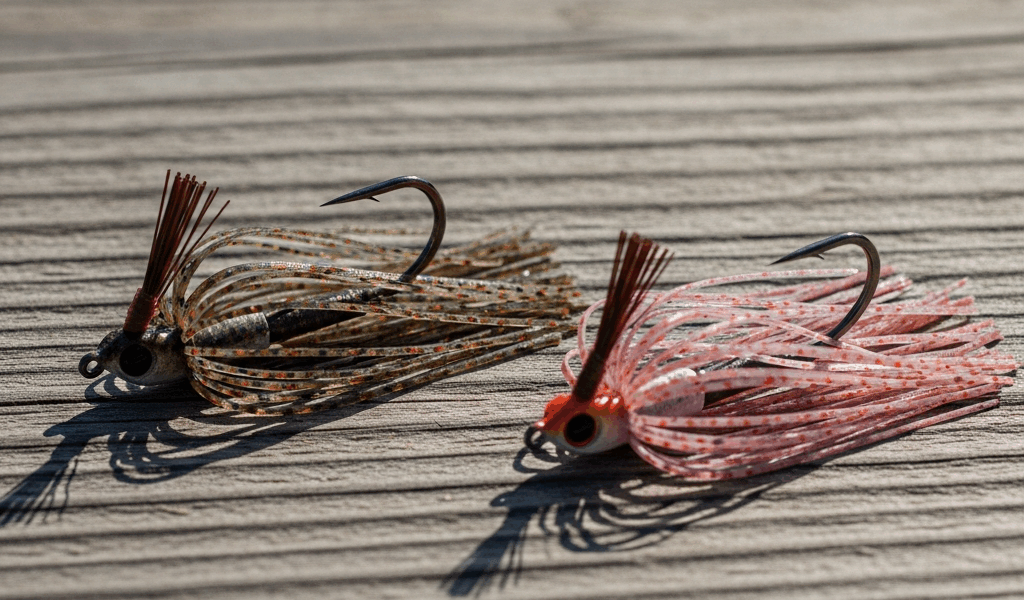
What Jig Fouling Actually Looks Like
Saltwater jigging has gotten complicated with all the gear advice flying around. But honestly, most fouling problems come down to three things — and none of them require buying anything new.
Here’s what happens. The tail wraps around the hook bend mid-cast. The skirt collapses against the shank on the drop. The plastic rides crooked the whole retrieve, and when you finally get a take and drive the rod, the point buries itself in soft plastic instead of jaw. No hook-up. Fish gone.
That costs fish. Real fish. Not hypothetical ones.
The good news — and I mean this genuinely — is that fouling is almost always fixable once you know what’s actually causing it. Most guys blame the jig brand or chalk it up to bad luck. The real culprit lives somewhere between hook gap, casting stroke, and how you rigged the thing at the tailgate before you ever got to the water.
Your Hook Gap Is Too Small for the Bait
This is the most common cause. Also the easiest to fix. The hook gap — that distance between the point and the shank — is the throat of your entire rig. Too tight, and the soft plastic tail has nowhere to go except wrapped around the bend.
Frustrated by constant fouling in the marsh near Apalachicola, I grabbed a 1/2-ounce jig head with a standard 1/0 hook and threaded on a 4-inch paddle tail. That thing fouled every third cast. No exaggeration, third cast. Switched to a wider-gap 2/0 head — same plastic, same rod, same spot — and the problem vanished inside twenty minutes.
The rule is simple: the hook point should clear the top of the plastic body with visible daylight between them. Not close. Not touching. Actual clear space. Fat plastics — ribbed paddle tails, chunky shad profiles — need gap that can accommodate the body width without the bait settling down onto the bend.
Common culprits include:
- Bulky paddle tails on undersized 1/0 or 2/0 heads
- Thick-bodied swimbaits paired with micro jigs
- Wide-body soft plastics on heads with closed eye designs that reduce effective gap
Check the rig before the first cast. Plastic riding tight against the shank? Go up a hook size or downsize the bait. That single adjustment solves roughly 60 percent of fouling problems before you’ve even made a cast.
Your Casting Stroke Is Causing the Foul
Probably should have opened with this section, honestly. Casting technique matters more than most fishing content will ever admit. An aggressive snap cast or a sidearm lob sends the tail helicoptering on the drop — wrapped around the bend before the jig hits the bottom.
A clean cast versus a fouling cast. That difference is the difference between loading the rod smoothly and whipping it like you’re trying to kill something. Snap-cast — driving forward with sudden force — and the jig head accelerates faster than the plastic body can follow. The tail lags. Catches air. Spins. On the fall or the swing, it wraps.
Smooth and loaded changes everything. Accelerate gradually. Feel the bend build. Then release — and this part matters — release smoothly instead of snapping off. Jig and plastic move as one unit. No lag. No spin. No foul.
Wind makes this harder. Casting into a headwind tempts you to throw harder, which tempts the snap stroke. A sidearm lob in a stiff 15-mph breeze almost guarantees fouling because the plastic torques sideways mid-flight. Throw more into the wind with a smoother stroke. Accept losing some distance. You’ll gain reliability, which is worth more than an extra 8 feet of range.
Next time out, slow your casting motion down by 30 percent and just watch what happens. Most anglers throw way too hard for the conditions they’re actually fishing.
The Plastic Is Rigged Off-Center or Sitting Crooked
Even with the right gap and a smooth stroke, a poorly rigged plastic will foul. Off-center body on the shank means the rig spins on the drop. That spin drifts the tail. Tail wraps the bend. Every time.
Before threading, inspect the plastic. The entry hole should sit centered on the underside of the body. After rigging, hold the jig at eye level and look straight down the hook eye. Equal plastic on both sides. If it leans — even slightly — re-rig it. Takes 45 seconds.
Sometimes the plastic itself arrives bent or warped, especially if it sat in a hot tackle box through a July afternoon or came off the shelf slightly deformed. Heat straightening works here. Hold the bent section near a lighter — near, not in the flame — and straighten gently. The plastic softens and resets. Twenty seconds. Saves a trip back to the shop and probably a lost fish or three.
I use a spin test now before every session. Thread the plastic, let the jig hang free from the hook eye, and rotate it slowly. Centered and straight? It spins clean. Off-center? It wobbles visibly even at slow rotation. That wobble under load becomes a foul. Don’t make my mistake and skip this step because you’re in a hurry to get lines in the water.
Quick Fixes to Stop Fouling Before Your Next Cast
- Right hook gap for bait size — The point clears the plastic with visible space. No exceptions, no compromises.
- Smooth casting stroke — Load and release gradually. Snap-casting and aggressive sidearm throws cause helicopter spin on the drop.
- Straight rig — Inspect alignment before the first cast. Spin-test the jig at the dock or off the side of the boat.
- Consider a weedguard or wider-gap head — In dense grass or heavy cover, a purpose-built weedguard jig head stops fouling from vegetation while keeping the hook point clear and ready.
Jig fouling is a solvable problem. Not a gear quality issue, not bad luck, not the brand. Nine times out of ten it lives in the hook gap, the casting stroke, or how the plastic sits on the shank. Fix those three things — actually fix them, not sort of address them — and you stop losing fish to fouled rigs.


Stay in the loop
Get the latest saltwaterspots.com updates delivered to your inbox.