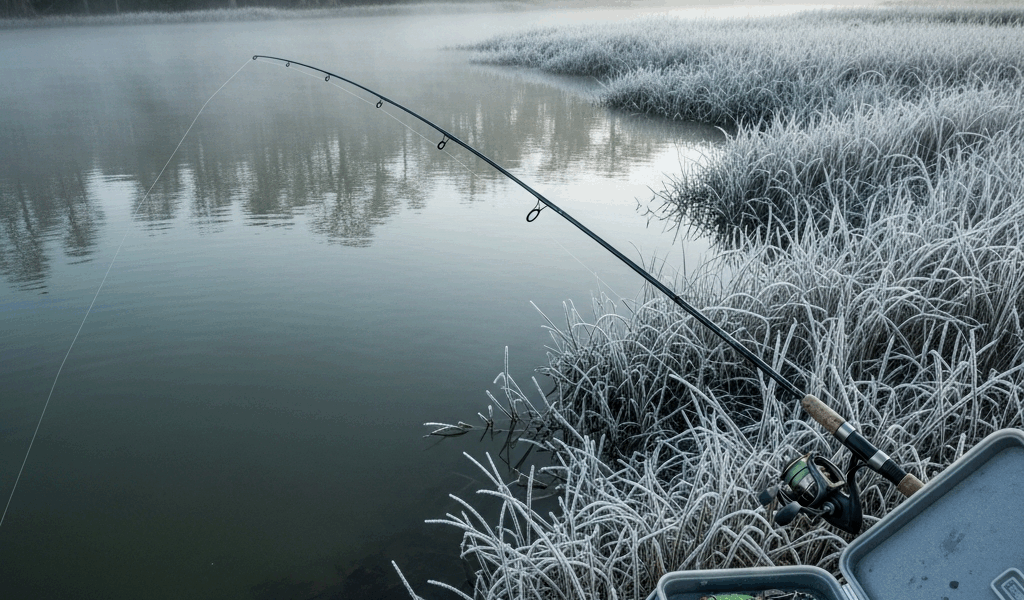
Why Speckled Trout Stop Biting in Cold Weather
Winter speckled trout fishing has gotten complicated with all the bad advice flying around. I know because I wasted three consecutive December mornings at Calcasieu throwing the exact same topwater setup that had me landing four solid specks before 7:30 a.m. back in October. Same spots. Same Corky. Same dawn casts. Absolute silence. I drove home convinced the fish had vanished entirely — or that I’d somehow forgotten everything I knew about reading water.
Neither was true. Today, I’ll share what I eventually figured out, mostly the hard way.
But what is cold-water trout shutdown, really? In essence, it’s a full metabolic collapse triggered by dropping water temps. But it’s much more than sluggish fish — it’s a complete restructuring of where they sit, what they’ll eat, and how much effort they’ll spend eating it.
What Cold Water Actually Does to Speckled Trout
Speckled trout are cold-blooded. Their body temperature mirrors whatever water they’re sitting in — no exceptions, no adaptation. Drop the water temperature and you’ve dropped their metabolism right along with it.
Above 60°F, these fish are aggressive. They chase lures, respond to fast retrieves, eat multiple times across a single morning. October is usually peak season for a reason.
Between 50°F and 60°F, everything gets deliberate. A trout that hit five shrimp imitations in one hour at 65°F might eat once at 55°F — then spend the next six hours digesting before hunger registers again. Digestion genuinely slows that dramatically.
Below 48°F, the engine nearly stalls. Movement becomes minimal. They’re not dead. They’re not gone. They’re dormant, parked in specific deep structure, eating only when something small and easy drifts right in front of them with no escape effort required.
That’s what makes the seasonal shift so deceiving to us anglers — it happens gradually. The bite gets slower, pickier, less forgiving over several weeks. Most people blame themselves. The water is doing exactly what physics requires it to do.
The Three Biggest Reasons They Go Quiet
Your Retrieve Speed Is Built for Warm Water
Frustrated by zero bites one late November morning, I finally swallowed my pride and asked a guide I bumped into on the south shoreline what I was doing wrong. He watched me work a 3-inch Corky — twitching three or four times every two seconds, covering water fast, expecting the same reaction I’d gotten all fall. He asked one question: “What’s the water temp?” Sixty-one degrees. He handed me his rod, showed me his cadence — one soft twitch, then a five-second dead pause, then another twitch. He caught two fish in twenty minutes. I went home and completely rebuilt how I fish November through February.
Fast retrieves demand fast digestion. Cold trout physically cannot process food quickly enough to justify chasing something darting past them at speed. If the calorie cost of the chase exceeds the calorie gain from the meal, they ignore it. Simple math. A slow, almost embarrassingly easy presentation? Completely different story.
You’re Fishing Shallow When Trout Are Stacked Deep
Cold trout don’t scatter. They concentrate — in channels, deep holes, anywhere the water column stays marginally warmer and energy expenditure drops to near zero. Shallow flats lose heat fast. Dark-bottom cuts and channel edges hold it longer.
If you’re still casting to waist-deep water where you loaded up in September, you’re casting to empty water. The fish have moved. They’re sitting 10 to 16 feet down on bottom edges, waiting for food to come to them rather than burning calories to hunt.
Your Lure Is Too Big
A cold trout isn’t interested in working for dinner. It won’t chase a 4-inch swimbait across 20 feet of water. It wants something small enough to mouth and swallow without the caloric expenditure exceeding what it gains from the meal.
Most anglers keep throwing the same 4-inch paddletails that crushed it in warmer months. Profile too large. The fish see it, calculate the effort, ignore it. Drop to a 3-inch paddle tail or soft plastic and you’ve dropped the effort-to-reward ratio into something a cold trout will actually act on. One full inch of size reduction makes a measurable difference in December. Don’t make my mistake of waiting until January to figure that out.
How to Adjust Your Retrieve and Presentation
Probably should have opened with this section, honestly. Once you accept the problem, the adjustments aren’t complicated — they’re just uncomfortable for anglers used to covering water aggressively.
Slow Everything Down Dramatically
Cold-water retrieve isn’t “slow” in the normal sense. It’s patient to the point where your brain starts arguing with you. The twitch should be minimal — nudge the rod tip one inch, not snap it. The cadence looks like: one small twitch, pause four to five seconds, twitch once more, pause again. Some days you’ll sit fifteen seconds between any movement at all. That feels completely wrong. It’s right.
Your instinct will push you to cover water, create action, keep things moving. Ignore it entirely. The trout won’t chase. It will only commit if the bait drifts close and moves so effortlessly that the energy cost registers as worth it.
Deadstick Soft Plastics
Cast a soft plastic on a light jighead and let it sit on bottom. Not twitching. Not working. Sitting. Move it every ten seconds with one small upward pop, then let it fall slack-line to the bottom. Trout will mouth it during the fall or the motionless pause — often both.
A 3-inch Gulp Shrimp or small paddle tail on a 1/8-ounce jighead is about as dialed-in as it gets for this. Cast, settle, wait. The bite typically feels like pressure rather than an aggressive strike. Set the hook anyway — cold trout don’t slam baits.
Use Suspending Twitch Baits With Extended Pauses
A suspending hard bait — something like a Corky Fat Boy or MirrOlure 17MR — that roughly matches local baitfish profile is nearly perfect for cold water. Cast, twitch once, pause five full seconds. Twitch again, pause five seconds. The bait suspends at depth instead of floating away or sinking out of the strike zone. A cold trout investigating that pause can eat it without anything escaping.
I’m apparently a 2.5-inch MirrOlure guy now and that size works for me while the 3.5-inch version never produces in December water. Size down at least one full step and you’ll notice the difference immediately.
Where to Find Trout When the Water Cools Down
Location matters more in cold weather than presentation does — and that’s saying something. Wrong spot with perfect technique produces zero bites. Right spot with clumsy technique produces consistent action.
Target depth transitions. Channel edges. Any area that drops from three feet to eight feet across a short horizontal distance — that’s where trout stack. They’re not spread across open flats anymore. They’re concentrated on structure that lets them minimize movement while still sitting near baitfish travel routes.
Dark-bottom pockets absorb sunlight and stay measurably warmer than surrounding sandy areas. On sunny midday windows — rare in a cold December but worth noting — those shallow dark-bottom areas can open up brief feeding bursts. Fish them from roughly 10 a.m. to 2 p.m. when the sun angle is highest and the water has absorbed maximum heat.
Slack water is your enemy in winter. When tidal movement stops, cold trout stop feeding almost entirely. The absence of baitfish movement and oxygen circulation triggers near-complete shutdown. Fish incoming or outgoing tides. Wait out slack periods instead of grinding through them — you’ll save yourself hours of frustration.
Cold Front vs. Stable Cold — It Is Not the Same Bite
A stable cold period is completely fishable. A cold front moving through is a bite killer. These are not the same condition and treating them identically is one of the more common winter mistakes I see.
When a front passes through, barometric pressure drops fast. Trout sense that pressure shift and shut down almost completely — for 24 to 48 hours in most cases. They go deeper. They stop feeding. They wait. The bite doesn’t slow; it stops.
Fishing during a front passage is largely a waste of time and fuel. Check the forecast before you load the boat. If a front is moving through today or tomorrow, accept poor results or don’t go. Wait until after the system clears and pressure stabilizes. Then — even in genuinely cold water — the bite returns.
Post-front stable cold is where your best winter fishing lives. Water sitting at 52°F that’s been unchanged for two days will out-produce 58°F water caught in the middle of a front passage every single time. Stability matters more than the actual temperature reading on your meter.
Cold-weather speckled trout are absolutely catchable. They require patience, smaller profiles, deeper water, and moving tides. Slow your retrieve to the point of discomfort. Downsize your plastics. Find the depth transitions. Fish the tidal movement windows. Do those four things consistently and you’ll catch specks all winter — just differently than you did when the water was warm.

Stay in the loop
Get the latest saltwaterspots.com updates delivered to your inbox.