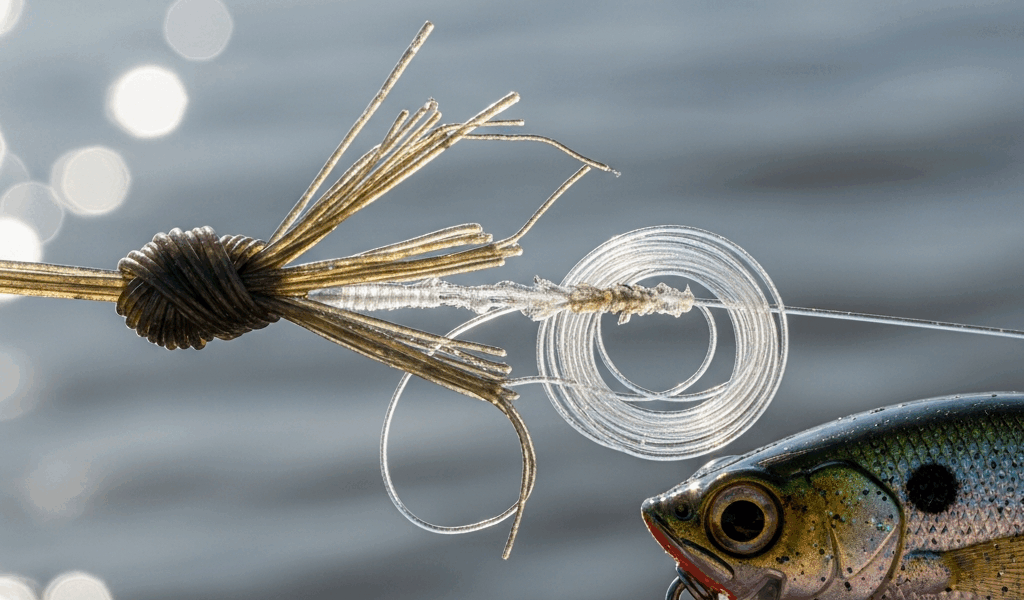
Speckled Trout Break-Offs Have Gotten Complicated With All the Conflicting Advice Flying Around
As someone who spent three seasons losing fish I had no business losing, I learned everything there is to know about why leaders fail on speckled trout. Today, I will share it all with you.
The break-off is telling you something. Not that you’re unlucky. Not that the fish was “just too big.” There’s a specific weak point in your system — and once you find it, the break-offs stop. Most anglers guess wrong on this. They assume pound test is the problem, buy heavier fluorocarbon, and snap off again in the exact same spot. Frustrating doesn’t cover it.
Three things actually cause break-offs: a poorly seated knot, diameter mismatch between your braid and fluorocarbon, and how you’re fighting the fish after it’s hooked. One of those is your real problem. Probably one specific one. Let’s figure out which.
Your Knot Is Almost Certainly the Culprit
Probably should have opened with this section, honestly. I burned two full seasons blaming my 12-pound Seaguar before realizing my improved clinch knot was the actual bottleneck the whole time.
Three knots dominate trout leader rigs — the improved clinch, the uni knot, and loop-to-loop connections. Each one fails differently. Each one can feel rock-solid in your living room and give out the moment a speckled trout decides to make a hard run toward the dock.
The improved clinch is fast. Five or six wraps around the hook eye, tag end threaded back through the first loop, then through the wide loop. Feels tight when you pull it by hand. But what is a properly seated knot, really? In essence, it’s wraps that have bedded down flush against each other under load. But it’s much more than that — it’s a knot that was allowed to cinch slowly, with moisture, so nothing slipped during tightening. Without that, you’ve got a knot that feels solid but is basically waiting for a fish to expose it.
Fluorocarbon is slippery. More than mono. Way more. A dry clinch knot on fluorocarbon doesn’t seat — it compresses slightly, holds under hand pressure, then releases the moment a trout loads the line hard. The wraps slide. The line breaks. You’re left wondering what happened.
The uni knot uses seven or eight wraps and cinches down on the line itself rather than relying purely on friction between wraps. More reliable for fluorocarbon. Still fails if you skip one thing.
Wet the knot before you cinch it. Water or saliva — doesn’t matter. That’s the fix. I know it sounds like the kind of tip that couldn’t possibly make a real difference. It absolutely does. Moisture cuts friction between the line and itself, which lets the wraps actually travel and bed down against each other during the cinch. Dry fluorocarbon against dry fluorocarbon grabs before it seats. The knot locks up halfway there and you never know.
After cinching, pull hard with your fingers — probably around 70 percent of what you think the leader can handle. A seated knot won’t budge. If anything moves, redo it. Trim the tag end to about an eighth of an inch. Longer tags act as leverage points under load. Don’t make my mistake of leaving a quarter inch because trimming felt finicky.
One more thing on knots: fluorocarbon needs more wraps than monofilament. I’m apparently a slow learner on this — I kept using five wraps because that’s what worked with mono for years, and Berkley Vanish kept failing me while my buddy’s Trilene knots held fine. Five wraps. That was my whole problem. Go to seven or eight with fluorocarbon. The material doesn’t collapse on itself the way mono does, so it needs more contact surface to hold.
Diameter Mismatch Is Breaking Off More Anglers Than Anyone Admits
Here’s where the weak-link math becomes impossible to ignore. Twenty-pound braid. Fifteen-pound fluorocarbon leader. Sounds solid. But if the connection knot between those two materials is only holding at 10 pounds — which happens constantly with improperly tied uni knots — you’ve built a 10-pound system. The braid rating is irrelevant. The leader rating is irrelevant. The connection is all that matters once a fish loads it.
Twenty-pound PowerPro braid runs about .015 inches in diameter. Fifteen-pound Fluorocarbon leader runs closer to .018 inches. When you tie those together, the smaller diameter line — the braid — cinches fast and easy. The thicker fluoro needs more force to actually seat. Most anglers pull until the knot feels tight. Tight and seated are not the same thing. That gap is where fish are lost.
That’s what makes diameter mismatch so frustrating to diagnose — everything looks fine. The knot feels fine. It holds fine when you test it by hand. Then a 22-inch trout makes a run toward a piling and the connection gives at exactly the wrong moment.
For wade fishing clear flats — the kind of skinny water where you’re targeting 18 to 24-inch fish and visibility matters — 12-pound fluorocarbon leader paired with 15-pound braid is the balance point. The diameter difference is minimal. The system fights fish at the line, not the knot. That’s where you want the failure point if there has to be one.
For dock fishing at night when trout run harder and you can’t see what you’re doing, 15-pound fluoro with 20-pound braid works better — more drag capacity, more margin. But your diameter mismatch is now real. Account for it with more wraps and more patience during the cinch. Rushing a connection knot at night under a dock light is how a trip ends early.
How You’re Fighting the Fish Might Be Undoing Everything Else
Frustrated by break-offs on gear that should hold, most anglers crank the drag tighter. This makes things worse. A tight drag on a fluorocarbon leader is a break-off that hasn’t happened yet.
Speckled trout run in short, hard surges — maybe three seconds of real acceleration. That’s it. If your drag is set tight enough to hold them, the leader absorbs a shock load it wasn’t built for. Fluorocarbon handles steady pressure well. Shock loads are a different story. The line breaks. Not because it’s too light — because it was never designed for that kind of sudden spike.
Set drag so you can strip line off the reel with steady hand pressure. Not jerky. Steady. When the fish surges, the drag gives, the rod loads up, the line moves — no shock load builds. No break. That’s the whole mechanism. So, without further ado, let’s nail down the rod angle piece too.
Keep your rod tip at roughly 10 o’clock when a trout runs. The bend in the rod is doing real work — absorbing what the drag doesn’t. Drop your tip to follow the fish and you lose that cushion. Raise it too high trying to horse the fish in and you create a different kind of load problem. Steady angle, drag set loose enough to allow the surge, and a leader that was tied right — that’s the system that keeps fish on.
A 60-Second Pre-Trip Leader Check Worth Actually Doing
While you won’t need much time for this, you will need a handful of honest pulls and about one minute before you step off the boat or wade in.
- Run your fingers over the last 12 inches of leader. Wind knots, abrasion spots, any roughness — cut back past it and retie. A single nick is a break point. That’s all it takes.
- Test the terminal knot by hand. Pull hard. Nothing should move. If the knot slides even slightly, retie it right there.
- Test the braid-to-fluoro connection from both directions. Pull toward the rod, then pull toward the lure. No slipping from either side.
- Strip drag with steady hand pressure. Line should come off the reel. If it won’t move, it’s too tight — and you’ll find out the hard way on the first solid fish.
First, you should diagnose which failure point is yours — at least if you want to stop replacing leaders every other trip. The knot might be the best starting point, as speckled trout fishing requires clean connection integrity above everything else. That is because the knot is the one variable you control completely, every single time you rig up. Fix that first. Then look at diameter mismatch. Then look at how you’re fighting fish. One of these three is costing you. Find it, fix it, and the break-offs stop.


Stay in the loop
Get the latest saltwaterspots.com updates delivered to your inbox.