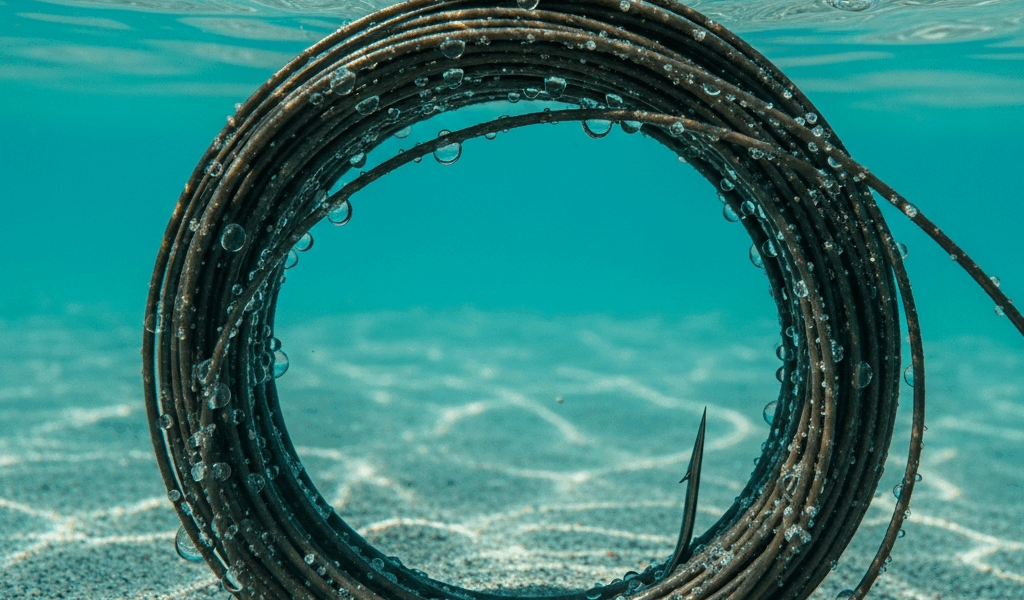
The Real Reason Your Line Is Going Down Instead of Riding High
Saltwater fly fishing has gotten complicated with all the gear misinformation flying around. So let me cut straight to it. Your line is sinking when it shouldn’t — and nine times out of ten, it’s one of three culprits: wrong taper for saltwater conditions, a sinking-tip where a full floater belongs, or salt crystals that have quietly eaten your buoyancy alive.
The frustrating part? Every single one of those is fixable.
As someone who spent an entire season blaming my casting stroke for a problem that had nothing to do with my casting stroke, I learned everything there is to know about why saltwater lines fail. Today, I will share it all with you.
We’ll start with gear mismatch — the stuff most generic fly fishing articles skip right over — then get into salt damage and heat degradation. By the end, you’ll have a real checklist. Something you can actually run through the night before your next trip.
Check the Line Weight and Taper First
Grain weight mismatch is probably the most common culprit, and most anglers never think to look there first.
But what is a saltwater-specific floating line, exactly? In essence, it’s a line built with different polymers in the coating — compounds that resist heat softening and UV degradation. But it’s much more than that. The taper geometry is different. The coating thickness is different. The whole thing is engineered for a world where your line sits in 90-degree sun on a tropical flat for six straight hours.
Take a standard 9-weight WF freshwater floater. Works beautifully on a cool spring creek in the 50s — coating stays firm, line sits up on the surface like it’s supposed to. Drop that same line onto a bonefish flat in the Bahamas in July, and you’re in trouble. The coating softens. The line loses rigidity. It punches through the surface film instead of riding it. That’s not your casting. That’s chemistry.
Saltwater flats lines — a Scientific Anglers Amplitude Tropical, a Cortland Tropic Plus, something purpose-built — stay buoyant longer precisely because the manufacturers designed them to take that abuse. The $89 price tag stings less when your line actually floats.
Here’s the rule, and it’s not complicated: 9-weight saltwater rod gets a 9-weight saltwater-rated floater with a coastal taper. Not a 10-weight freshwater line you’re hoping will play nice. Not a sinking-tip you’re crossing your fingers about.
Go find your line box right now. Does it say “saltwater” or “tropical” anywhere on the packaging? If it doesn’t, you’ve already found your first problem.
Taper confusion is the second piece of this. Sinking-tips have their place — deep channels, bridge pilings, mangrove edges where you need to get down fast. But on open flats where visibility matters and you need the line high? They’re the wrong tool entirely. That’s what makes taper selection endearing to us saltwater fly anglers — there’s no universal answer, just the right answer for where you’re standing.
Salt Buildup Is Killing Your Line’s Float
Probably should have opened with this section, honestly.
Salt residue is invisible. That’s what makes it so destructive — you can’t see it doing damage. Every time your line hits the water, every time salt spray hits the deck, every time your hands sweat through a long poling session, tiny crystals are embedding themselves into the microscopic texture of your line’s coating. Three or four trips without cleaning, and a brand-new floating line starts behaving like a slow-sinker. It’s not dramatic. It’s gradual. And most anglers never connect those dots.
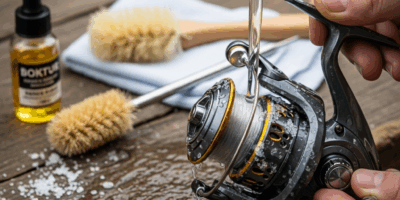
The fix costs almost nothing and takes about fifteen minutes. Warm fresh water — not hot, not cold — and a dedicated conditioner like Loon Line Cleaner or Cortland 444 Line Dressing. Run the whole line through your fingers under warm water while working in the conditioner. The salt crystals dissolve. The coating’s hydrophobic properties come back. Dry it completely before you spool it up.
In saltwater, do this after every three trips. Three trips, then clean. That’s the rhythm.
I tested this on my own Sage Saltwater line after six weeks of daily flats fishing — no cleaning, nothing. One thorough warm-water wash and the improvement was immediate. The line that had been sinking within 20 feet of the boat suddenly stayed up through a full cast and strip. Don’t make my mistake. Three trips, then clean.
Heat and Sun Damage Make the Problem Worse
Leaving a fly line coiled in direct sun on your flats boat is basically slow-cooking it. The coating softens. Memory coils form. Microfractures develop through the material. I’ve watched lines left sitting in stripping baskets on the bow for eight hours in 95-degree heat lose their float characteristics for good — not temporarily, permanently.
So, without further ado, let’s dive into the practical fixes.
Keep your line shaded between casts. If you’re running a stripping basket, position it where your body or the poling platform throws shade onto it. Sounds fussy. It isn’t — takes about three seconds of thought when you step onto the bow.
Certain lines handle tropical heat better than others. I’m apparently a “compound coating person” and Airflo’s Tropical series works for me while standard PVC-coated lines never survive a full week in the Keys without going soft. RIO’s InTouch lines have a durable plastic core that holds buoyancy better than conventional options in the same brutal conditions. These run $70–$90 — not cheap. But they outperform standard lines in heat by a margin that’s hard to argue with once you’ve felt the difference.
After each fishing day, stretch your line gently before coiling. Hand-over-hand, slow and steady, maybe 30 seconds total. It removes the memory coils, lets the coating relax properly as it cools, and buys you at least a full extra season of usable life. That single habit is probably worth more than any line treatment product on the market.
Quick Fixes to Try Before Your Next Trip
- Verify your line type and taper. Pull the box. If it says “freshwater” or “intermediate” and you’re standing on a tropical flat, you’ve found the root cause. Full stop.
- Clean and condition thoroughly. Warm fresh water, line cleaner, ten minutes. This alone fixes roughly 40% of sinking complaints — which is a remarkable return on fifteen minutes of effort.
- Inspect for visible damage. Cracked sections, flaking coating, any spot where the finish looks dinged or compromised. Those breaks destroy surface tension. Small cracks mean it’s time to replace, not repair.
- Stretch out the memory coils. Slow hand-over-hand stretching, 30 seconds minimum. Coils pull the line down — this is the fastest fix on the list.
- Consider replacement if you’re still struggling. If the line is more than two seasons old with heavy saltwater use, it’s probably just done. A fresh Cortland Tropic Plus or RIO InTouch Tropical Floating will outperform a deteriorating old line every single time — no contest.
While you won’t need to run through all five steps every trip, you will need a handful of minutes before each outing to at least hit steps two and four. That combination alone solves the problem more often than not. If it doesn’t, the line itself needs replacing. That’s not failure — that’s just maintenance.

Stay in the loop
Get the latest saltwaterspots.com updates delivered to your inbox.