The Real Reason Saltwater Hooks Rust Faster Than You Think
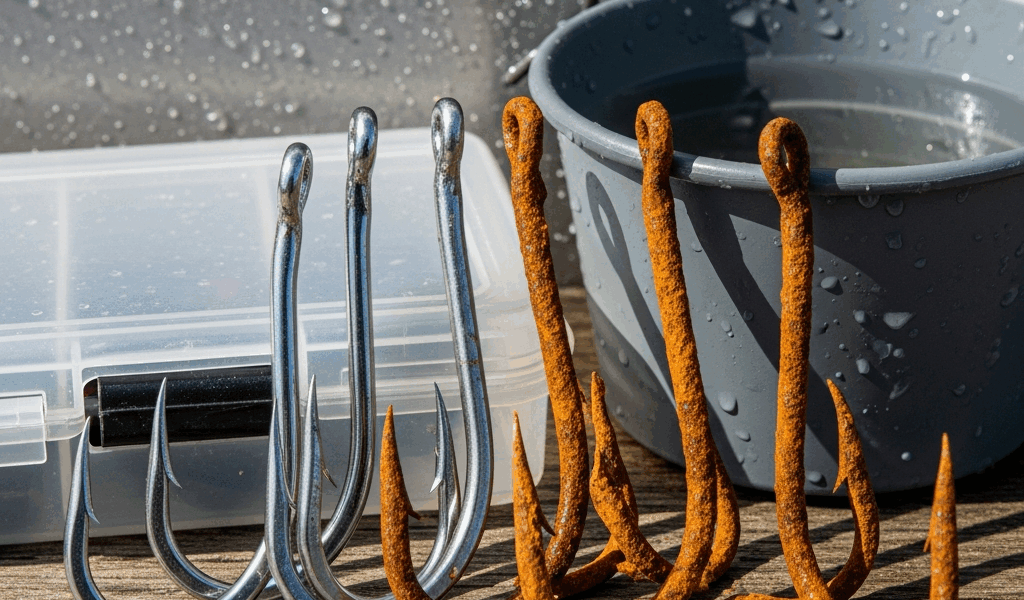
Saltwater hook corrosion has gotten complicated with all the half-baked advice flying around. Most anglers think the problem starts when they reel in their last cast. It doesn’t. It starts the moment dissolved salt and oxygen collide with bare steel — and that’s a fight you’re already losing before you reach the truck.
Saltwater is a genuinely hostile environment for metal. We’re talking full electrolytic conditions where sodium chloride drives oxidation hard and fast. Freshwater anglers can get away with sloppy habits. Saltwater anglers cannot. That’s what makes this hobby so punishing on gear.
Probably should have opened with this section, honestly — the real culprit isn’t just salt itself. It’s what happens after you leave the water. A single hook sealed in a humid tackle box for three days will rust faster than one left out in open air, even if both spent the morning in the ocean. Moisture plus steel plus zero airflow equals rapid corrosion. Add trapped salt residue and you’ve essentially built a little rust incubator inside a dark plastic box under your truck seat.
Sequence matters here. Storage conditions amplify the damage that initial saltwater exposure started. Most anglers only ever address half the problem, and then wonder why their hooks look like something dug out of a shipwreck.
Your Hook Coating Is Already Working Against You
Walk into any tackle shop and three finishes dominate the shelves: tinned, nickel, and black nickel. Each one tells a different story about how long your hooks will actually survive in saltwater.
Tinned hooks are the budget option. Cheap — usually $3 to $5 per pack — and they look silver right up until they don’t. The coating is thin. Any time your hook scrapes a rock, a shell, or the corner of your tackle box, you’ve exposed bare steel underneath. As someone who learned this the hard way on a permit trip to the Bahamas, I can tell you exactly what happens next. I grabbed a box of tinned shrimp hooks because they were on sale — $3.49, Mustad size 2/0 — and by day four the points were visibly orange. The coating had failed completely. Don’t make my mistake.
Nickel-plated hooks sit in the middle ground. Better than tinned, still vulnerable. The nickel layer runs thicker than tin, but not dramatically so. They hold up reasonably well across a few trips — maybe five or six outings — but they’re not a long-term answer if you’re fishing saltwater more than a handful of days per month.
Black nickel hooks look serious and clean. Popular with dedicated saltwater anglers. But — and this matters — black nickel is often just a thin dark coating over nickel or plain steel underneath. It looks tougher than it actually is. The visual appeal makes people assume they’re buying durability. They’re not always. Some brands apply black nickel properly. Gamakatsu and Owner are exceptions here. Others cut corners in ways you won’t notice until trip three.
Stainless steel hooks are the legitimate corrosion solution, but they come with trade-offs worth knowing. They run $8 to $12 per pack. They’re harder to sharpen. Hook ratios shift slightly on some species. But they won’t rust. Period. So, without further ado, that’s the honest hierarchy.
What you buy matters more than what you do after you buy it. Starting with a cheap tinned hook means even perfect storage won’t fully save you.
The Rinsing Mistake Most Saltwater Anglers Make
Rinsing hooks with freshwater after a saltwater trip is correct advice. Everyone says it. Almost everyone executes it wrong.
The mistake goes like this: you get back to the truck, spray the rod and reel with the hose, dunk everything in a bucket for 30 seconds, then pack it while it’s still wet. You think you’ve solved it. You haven’t. You’ve trapped moisture inside a sealed plastic container with bare metal, which is arguably worse than skipping the rinse entirely.
Rinsing only works if hooks air-dry completely before storage. Completely means 2 to 4 hours minimum — longer if humidity is high. In Florida or coastal Southern California, budget 4 hours. In Arizona or New Mexico, maybe 2. Most anglers don’t wait. They rinse and pack immediately because they’re exhausted and hungry and the truck is running. Understandable. Still wrong.
Water temperature matters too. A quick splash of cold hose water doesn’t pull embedded salt from hook eyes, barbs, or bends. Warm freshwater — not scalding, but genuinely hot-to-the-touch — dissolves salt residue far more effectively. Some guides I’ve fished with keep a small 5-quart cooler filled with warm water and a soft brush on the boat deck. Takes maybe five extra minutes. Reduces rust dramatically. That’s a trade-off worth making.
One more thing: if you rinse lures with soft plastic trailers still attached, those plastics leach plasticizer into the rinse water. That accelerates corrosion on nearby hooks. Separate your hardware from soft plastics before rinsing. Store them apart afterward. Small detail. Measurable difference.
How Your Tackle Box Is Accelerating the Problem
Enclosed plastic tackle boxes create humid microclimates — basically tiny terrariums optimized for corrosion. A sealed box sitting in 75-degree heat at 70 percent humidity is not protecting your hooks. It’s slowly destroying them.
Hooks stored alongside wet braided line, damp leaders, or that one soft plastic you forgot to squeeze out will rust faster than hooks stored in dry conditions. Moisture from one item spreads to everything nearby. I’m apparently the guy who stored a wet topwater lure directly next to his best stainless hooks for two full seasons — and Savage Gear works for my storage setup now while that old Plano arrangement never did stop rusting things. Obvious in hindsight.
Silica gel packs solve this. Buy the reusable kind rated for tackle boxes — usually $6 to $10 for a set of three or four. Recharge them every two to four weeks depending on your local humidity. They’re not optional. They’re maintenance, like oil changes or re-spooling line.
Tray design matters more than most people think. Trays with drainage holes positioned above the box floor beat flat sealed compartments every single time. Water doesn’t pool. Air moves. If your current box lacks draining trays, it’s worth upgrading. Plano and Flambeau both make boxes built specifically with saltwater anglers in mind — $30 to $50, ventilation included as a design feature rather than an afterthought.
Keep wet gear separated from dry gear. Leaders go in a separate bag. Soft plastics stay in their own compartment. Hooks live where air can actually reach them.
How to Actually Keep Hooks Sharp and Rust-Free Longer
But what is a realistic maintenance routine? In essence, it’s a short sequence of specific steps done consistently. But it’s much more than just rinsing and hoping.
Rinse after every saltwater trip using warm freshwater. Let hooks air-dry for at least 3 hours — overnight is better, especially in humid climates. Pack them into a tackle box with fresh silica gel inside. Inspect visually 24 hours before your next trip. Any orange tinting or surface pitting means replacement. Fish a corroded hook and you’re not really fishing — you’re wasting your time and your shot at a good fish.
Most anglers don’t realize rust dulls a hook point faster than regular use does. A bright, sharp hook pierces cleanly on the strike. A corroded point deflects. You’ll miss fish and blame your timing or your hookset. It’s not your timing.
Budget for hook replacement the way you budget for line. If you’re throwing a $15 plug with a corroded factory hook on it, replace the hook before the trip. Stainless steel replacements run $8 to $12 per pack — Owner ST-36 or Gamakatsu SP-MH if you want specifics. Losing a tarpon or a wahoo because you wanted to save yourself the cost of a pack of hooks is genuinely the worst math in fishing. That’s what makes proper hook maintenance so endearing to us saltwater anglers who’ve done that math the hard way.
This isn’t complicated. It’s just specific. Coating selection, rinse water temperature, drying time, storage humidity, and inspection frequency — address each one and your hooks will outlast your fishing buddies’ gear by a significant margin.

Stay in the loop
Get the latest saltwaterspots.com updates delivered to your inbox.