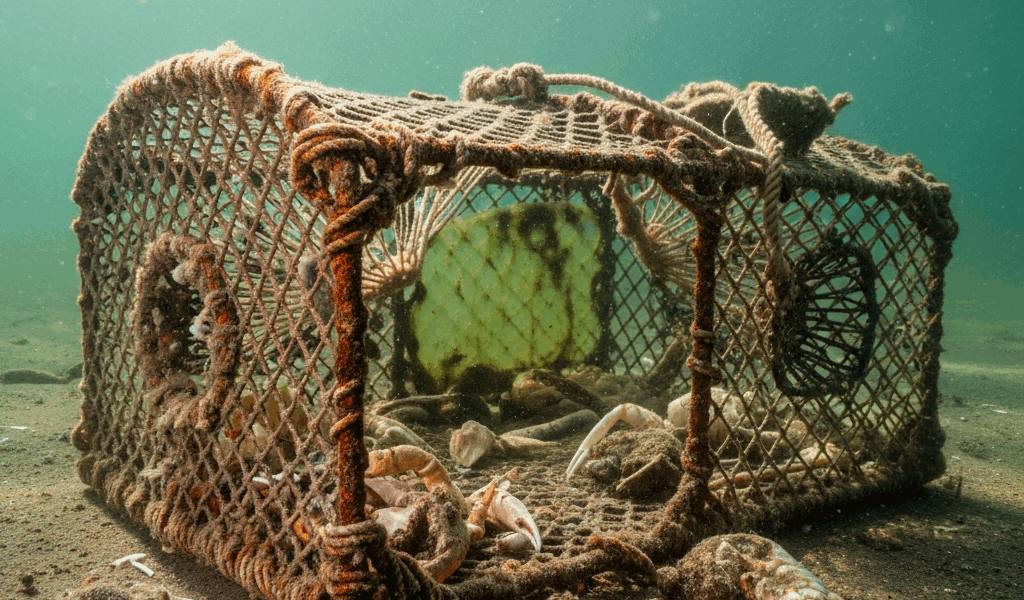
Why Your Crab Trap Keeps Catching Empty Every Time
Crabbing has gotten complicated with all the conflicting advice flying around. Drop here, use this bait, wait this long — and yet you still pull up nothing. I’ve been there. Three full seasons of barnacles and disappointment before I stopped blaming the water and started actually diagnosing what I was doing wrong.
Today, I will share it all with you.
The empty trap problem isn’t mysterious. It follows patterns — specific, fixable patterns that repeat themselves on bays from the Chesapeake to the Gulf Coast every single summer. You drop. You wait. You pull. Nothing. The bait is gone, the crabs are somewhere else, and you’re standing there wondering why the guy thirty feet down the dock is filling a cooler.
Here’s the diagnostic sequence, ranked by how often each one is actually the culprit.
The Most Common Reason Is Bait That Stopped Working
Bait dies. It degrades. It washes out. And once it does, your trap is essentially invisible.
I learned this watching a trap master on the Delaware Bay — guy probably in his sixties, beat-up Igloo cooler, nothing fancy — pulling crabs hand over fist while my identical trap, dropped maybe twenty feet away, came up completely empty. The difference wasn’t some secret spot. It was bait condition. His chicken necks were fresh that morning. Mine had soaked overnight in a cooler I forgot to put ice in. That was it.
Crabs hunt entirely by scent. Fresh, pungent bait sends a chemical trail through the current. Old, dried-out, or freezer-burned bait sends nothing. Here’s what actually works:
- Chicken necks — the gold standard for most East Coast crabbing. Buy them frozen in bulk, usually $8 to $12 per 5-pound pack at any grocery store. Thaw them the night before. Use within 24 hours of thaw. They stay effective 45 minutes to 2 hours in warm water, 3 to 4 hours when it’s cold.
- Bunker (menhaden) — stronger scent than chicken, best in spring and fall. A whole bunker holds up 1 to 2 hours. Cut bunker pieces in a mesh bag? Twenty to 30 minutes before they fall apart. Strong current eats through them fast.
- Mullet — regional favorite throughout the Gulf and mid-Atlantic. More durable than bunker. Two to 3 hours per soak, sometimes longer.
The mistake most people make is using bait that’s either too fresh or too clean. Crabs want meat that has already started breaking down — not rotting to the point of mush, but past that grocery-store-fresh stage. Vacuum-sealed chicken from the store today might work. Chicken from your freezer burned since March will not.
Watch for washout too. In strong current or shallow water with wave action, bait can rinse completely out of the cage in 15 minutes. If you’re in a bay with 2 knots of current moving through, switch to bunker or cut your soak window to 30 minutes and pull more often. Also — and don’t make my mistake here — never buy pre-packaged crab bait from tackle shop shelves unless you opened it that day and it smells like actual decay. Most of it is overpriced filler. Grocery store chicken or bunker from a bait-and-tackle wholesaler cuts your cost per soak by roughly 60 percent.
Soak Time Is Either Too Short or Way Too Long
Probably should have opened with this section, honestly.
Beginners pull traps every five minutes like they’re slot machines. Meanwhile, some experienced crabbers leave theirs down way too long — pull once, find the crabs have already eaten through the bait, explored every corner of the trap, and walked back out looking for something better. Both extremes kill your catch.
Soak time is almost entirely driven by water temperature. Cold water means slow crabs means long soaks. Warm water flips that completely.
- 50–60°F water (early spring, late fall): Soak 45 to 90 minutes. Crabs are sluggish. They take their time finding bait and committing to entering.
- 60–70°F water (late spring, early fall): Soak 20 to 45 minutes. Crabs are active but not frantic.
- 70°F+ water (midsummer): Soak 10 to 20 minutes. Pull more often. Crabs enter fast, eat fast, and leave faster than you’d expect.
The overnight soak is the second mistake. That’s not crabbing — it’s inviting every crab in a quarter-mile radius to strip your bait and leave undisturbed. Overnight windows only really work in deep, cold channels in winter where water temperature stays below 55°F and current is minimal. Otherwise, plan for daylight fishing with pulls every 15 to 30 minutes.
Most people complaining about empty traps are pulling at exactly the wrong time. Too early and the crabs haven’t moved in yet. Too late and they’ve finished dinner and gone back to cover. That’s what makes timing so frustrating to figure out — it’s not the trap, it’s the clock.
You Are Probably Dropping in the Wrong Spot
Crabs don’t live on open sand flats. They don’t congregate in featureless open water. They sit in cover — places where they can hide and still intercept food moving through.
Target these locations:
- Grass edges — the line where eelgrass or marsh vegetation meets deeper water. Drop along the edge, not buried inside the grass itself.
- Channel ledges — the drop-off where shallow bay floor suddenly descends 2 to 4 feet. Crabs hunt along the shallow side of that drop.
- Oyster reefs or rocky bottom — structural complexity draws them in. Crabs shelter here and come out to feed.
- Pier pilings and structure — shadows and current breaks hold crabs year-round, even in the off-season.
Open sand. Featureless silt. The middle of a straight, uninterrupted shoreline. These are trap deserts — I don’t care how good your bait is.
Learn to read the water. Color changes tell you depth — darker usually means deeper, often a channel edge. Watch where current pushes bait or surface debris, because crabs set up downwind of food sources moving through. If you own a depth finder, mark any transition from 3 feet to 5 feet. That’s crab country — at least if you’re working a mid-Atlantic or Gulf Coast bay system.
Tidal movement matters too. Crabs move shallower on an incoming tide and retreat on the outgoing. Fish the last hour of incoming and the first hour of slack water. Drop during a hard outgoing current and the crabs have already pulled back to deeper, slower water — your trap just sits there.
Your Trap Itself Might Be the Problem
But what is a properly functioning crab trap? In essence, it’s a one-way entry system that lets crabs follow bait scent in but makes exiting harder. But it’s much more than that — the whole design depends on every component working together, and one broken piece can turn your trap into an open buffet with no cover charge.
A broken trap is honestly worse than no trap. At least with no trap, you know what’s happening.
Run this inspection every season — I’m apparently obsessive about it now, and a $4 can of Rust-Oleum cold galvanizing compound works for me while ignoring the rust for “one more season” never does:
- Check for rust and corrosion. Visible rust pitting means replacement. A decent crab trap — pyramid or box style — runs $25 to $60. The Promar TR-555 is about $38 and has held up three seasons for me in salt water.
- Test the bait cage. Open and close it five times by hand. It should snap shut hard, not drift closed. A loose bait cage is a free crab buffet — they grab what they want without ever entering the main trap.
- Inspect all funnel openings. Entry holes should allow a legal crab in but make exiting with a full stomach difficult. Homemade or modified traps often have openings that are too wide. Crabs walk straight through like it’s a hallway.
- Check the door or escape hatch. It should close cleanly. If it sticks or gaps, file the frame down or replace the door entirely. This is usually a $6 fix, not a new trap situation.
- Look for mesh tears. Any opening larger than about 1/4 inch and a crab will find it. They always find it.
One design note worth knowing: pyramid traps perform better in deeper water with current moving through. Box traps hold more crabs but work better in calm, shallow water — 2 to 4 feet with minimal current. If you’re pulling empties consistently, try switching styles before you change anything else. Your trap might simply be wrong for your specific location.
How to Run a Quick Diagnostic Before Your Next Drop
So, without further ado, let’s dive in — here’s the checklist I actually run at the water:
- Inspect your bait. Is it pungent? Did you thaw it fresh within the last 24 hours? Is it still intact in the cage, or has current washed pieces loose? Fix: Replace with fresh bait. Don’t try to rescue old bait with a rinse — it doesn’t work.
- Set a timer based on water temperature. Don’t pull early. Don’t leave it overnight. Pull on schedule. This one change alone has probably doubled my catch rate over three years.
- Move to structure. Find grass edges, channel drop-offs, or depth transitions. Avoid open flats completely. Fix: Move the trap. Seriously. Just move it — 30 feet toward better structure beats an hour of waiting in the wrong spot.
- Run the five-point trap inspection above. Fix: Replace or repair the specific problem. Don’t fish a broken trap and wonder why it’s not working.
Even experienced crabbers have slow days. Water conditions shift overnight. Crabs migrate with bait schools. That’s real. But bait condition, timing, location, and trap integrity account for roughly 95 percent of empty trap problems — and all four of those are completely within your control.
Don’t make my mistake of spending three seasons blaming the water.
Fix the variables you can actually fix. The rest is repetition.

Stay in the loop
Get the latest saltwaterspots.com updates delivered to your inbox.