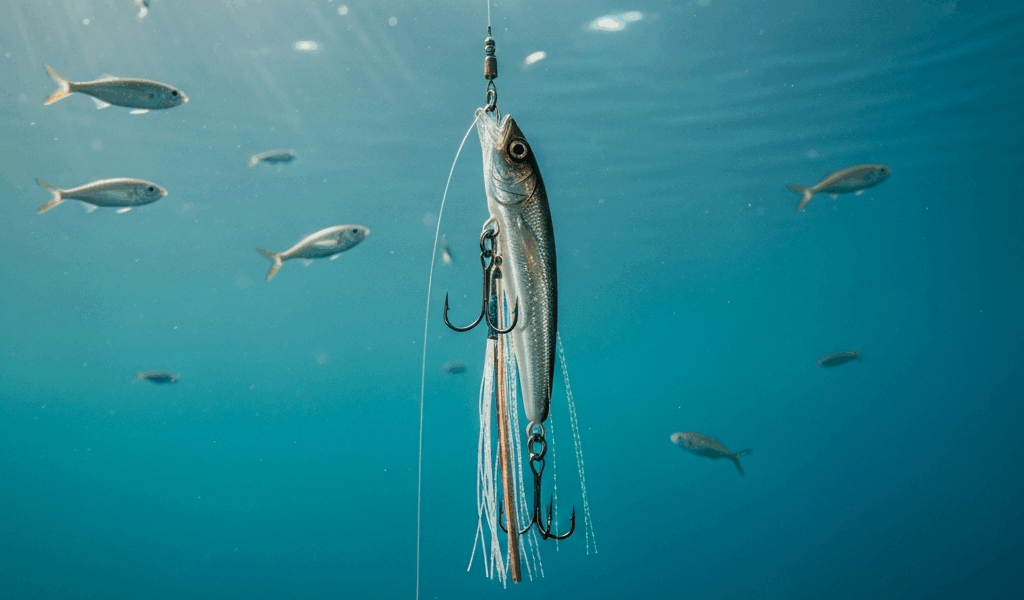
Why Your Saltwater Lure Keeps Getting Ignored
Saltwater fishing has gotten complicated with all the gear advice and color theory flying around. You’ve been casting for forty-five minutes. Nothing. Not a follow. Not even a curious bump. You tie on a different color. Then another. Three rod changes and a new leader later, you’re fully convinced the fish just aren’t there — except you watched someone thirty yards down the beach pull two redfish while you were still fumbling with your tackle box.
The lure isn’t the problem. As someone who burned through a solid decade of frustration and built a tackle box that weighed more than my dog, I learned everything there is to know about why fish ignore presentations that should work. Today, I will share it all with you.
But what is the real issue here? In essence, it’s a mechanical failure somewhere in your setup. But it’s much more than that — it’s usually four or five small failures stacking on top of each other until nothing about your presentation makes sense to the fish.
Start Here — Rule Out the Obvious First
Probably should have opened with this section, honestly. The number of fishless mornings I’ve wasted because I didn’t spend fifteen seconds checking my own gear is genuinely embarrassing.
A dull hook catches nothing. Full stop. Fish hit a blunt hook, feel pressure instead of penetration, and eject it instantly. You feel a faint tick. You think the bite is slow. It isn’t. The hook is just dead.
Test sharpness with your thumbnail. Place the point against your nail at roughly 45 degrees and press lightly. Sharp hooks grab and hold. Dull ones slide right off. If it slides, replace it — Gamakatsu SL12S size 2/0s run about $8 for a pack of six and are worth every cent. This check takes thirty seconds. Don’t make my mistake and skip it for months.
Check the lure body while you’re at it. Soft plastics split. After forty or fifty casts, a paddle tail shad can tear right down the seam — lure still moves, but the action is completely broken. Hard baits get stress fractures around the eye and start tracking sideways. Fish notice immediately.
Fouled hooks are the silent killer here. A strand of weed, a grain of compacted sand, a fiber from your casting glove — any of it lodged in the hook gap means the hook can’t close on a strike. I once spent an entire morning convinced a grass flat outside Homosassa was dead water. Eventually noticed my hook was packed solid with fine beach sand that had dried hard in the sun. Switched lures. First cast, strike. That was humbling.
Two minutes before each session: verify the point, inspect the body, clear the eye. You’ll outfish anglers who own twelve times the gear.
Your Retrieve Speed Is Probably Wrong
Water temperature is the master volume dial for fish aggression. Cold water kills it. Warm water cranks it up. At 58 degrees, a redfish will not sprint twenty feet to chase something moving like it’s July. That’s just not happening.
Cold-water retrieve — slow it down until it barely disturbs the column. I’m apparently a slow-twitch retriever by nature, and that approach works for me in November and December when other guys using faster cadences never connect. For soft plastics like Berkley PowerBait shads in the 4-inch size, I’m working the rod tip in controlled 6-inch movements with two-second pauses between strips. The lure creeps. It wobbles. It signals vulnerability, not fitness. Cold fish want the easy meal.
Warm-water retrieve flips the script. In 75-degree water — mid-July on Tampa Bay grass flats, say — speed up the cadence to 12-inch strips with a 1-second pause. Hard swimbaits like the Savage Gear Sandeel already vibrate tighter naturally, so a faster pull stays convincing without looking wrong.
The pause-and-drop is your trigger move for hesitant fish. That’s what makes it endearing to us inshore anglers — it’s stupidly simple but endlessly effective. After ten seconds of movement with no response, stop completely. Let the lure fall for two full seconds. Most refusals happen right there in that pause, and a lot of fish finally commit when the prey appears to slow down and give up. This one technique has salvaged more sessions for me than every color change I’ve ever made, combined.
Leader Weight and Length Are Spooking Fish
Clear, shallow water demands invisible leaders. A 40-pound monofilament leader attached to a 12-pound main line is a visible diameter jump — and fish in pressured inshore bays absolutely see it. They will not strike a lure dragging obvious hardware through gin-clear water at midday.
I switched from 40-pound mono to 15-pound fluorocarbon on a grass flat north of Tampa back in 2019. Caught a redfish on the second cast after nearly an hour of nothing on the heavier setup. Sun was directly overhead. Visibility was probably eight feet down. The fish could practically read the line.
Fluorocarbon might be the best option here, as clear-water fishing requires near-invisibility. That is because fluorocarbon’s refractive index sits closer to water than mono does — it bends light differently and essentially disappears in the column. Drop to 12 or 15 pounds for anything clearer than six feet of visibility. Pair that with a 24-inch leader instead of 36 and you’ve cut the visible profile by a third without sacrificing much abrasion resistance.
For snook in tight mangrove channels and speckled trout in shallow bay systems, this one adjustment alone can turn a completely dead bite into a productive afternoon. The lure presentation stays identical. Only the mechanics change.
You’re Fishing the Wrong Part of the Water Column
Lure weight controls where the presentation actually lives. Most anglers default to middle-column fishing — it covers the most space, feels efficient. Fish rarely stay in the middle.
On an outgoing tide, redfish and snook get pushed into deeper cuts and channel edges. They stack vertically rather than spread out horizontally. A suspending lure holding at 4 feet does nothing when fish are stacked at 8 feet against the bottom. You need something that reaches depth fast — a 3/8-oz jig head instead of 1/8-oz, or a weighted swimbait that cuts down quickly.
On the flood tide, fish scatter into shallow grass and flat edges. Now you need something that stays in 2 to 3 feet of water without dragging bottom every third strip. Same rod. Same retrieve. Different weight profile entirely.
Read where the bait is sitting before you ever cast. Frustrated by missed strikes on what looked like an active flat, I started watching the mullet behavior first — where they’re pushing, how fast, whether they’re fleeing or just wandering. Mullet getting chased into skinny water means predators are shallow. Shrimp backing into grass on the drop means it’s time to slow down and go deep on the next flat over. Match the depth to where the forage actually lives.
When Nothing Works — Change the Game, Not the Lure
After twenty minutes without a strike, something environmental has shifted. Tide position moves fish predictably. Sun angle changes aggression levels. Baitfish respond to light differently as the day progresses. The lure is innocent in all of this.
Here’s the exact decision framework I run through: Is the current still moving or going slack? Has the sun climbed above the water and killed the flat shadows? Did the wind shift in the last hour, changing how light penetrates the shallows? Answer those three questions first — at least if you want to actually diagnose what’s happening instead of just swapping lures endlessly.
Then make one environmental adjustment. Move to deeper water if the tide is dropping hard. Shift to a flat facing a different sun angle. Wait fifteen minutes for the light to change before giving up. Only after testing those changes do you consider moving locations entirely.
So, without further ado, the actual summary: hook sharpness, retrieve speed, leader visibility, water column depth, environmental timing. Work through that checklist before you blame the lure. Every single one of those factors will kill your bite independently — and when two or three stack together, you’ll go home fishless wondering if the fish were even there. They were. You were just invisible to them for the wrong reasons.


Stay in the loop
Get the latest saltwaterspots.com updates delivered to your inbox.