Best Bait for Mangrove Snapper — What Actually Works From Shore and Boat
Mangrove snapper fishing has gotten complicated with all the conflicting advice flying around. As someone who’s fished Florida docks, nearshore reefs, and Gulf Coast piers for going on twelve years, I learned everything there is to know about what actually gets these fish in the cooler. So I’ll save you the scroll: live shrimp on a #2 circle hook with 10lb fluorocarbon leader. That’s the answer. That single setup has accounted for more mangroves than everything else I’ve tried — combined. What follows breaks down why that combo works, what to throw when shrimp aren’t available, and how to rig correctly depending on where you’re standing.
This article includes affiliate links. We may earn a commission at no extra cost to you.
The Short Answer — Live Shrimp Wins Almost Every Time
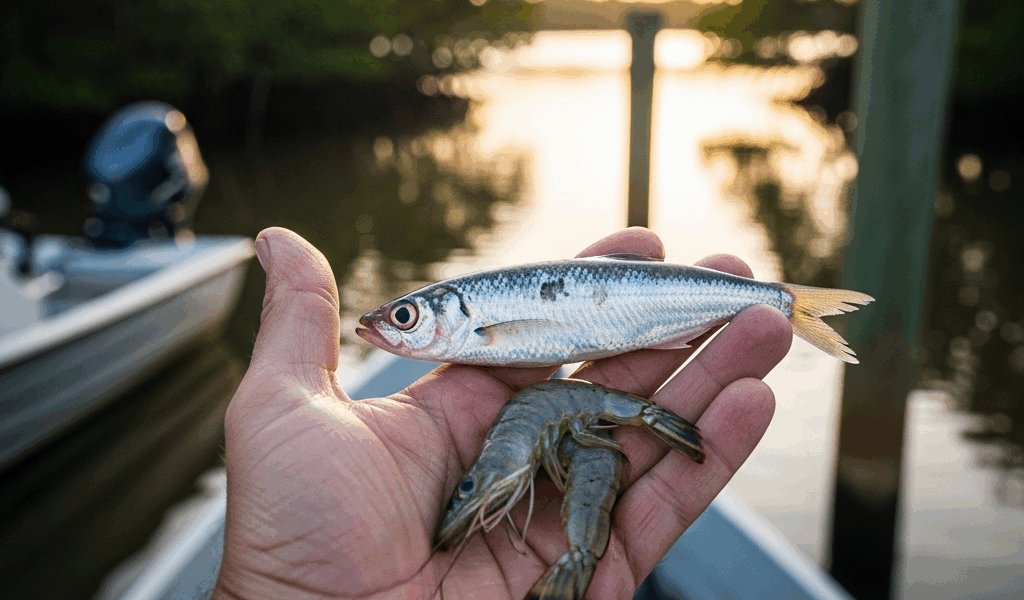
A live shrimp hooked through the horn — that pointy projection on the head — with a #2 circle hook and 10 to 12 inches of 10lb fluorocarbon leader is about as versatile and effective as mangrove snapper bait gets. Hook it through the horn, not the tail or body. The shrimp lives longer that way. Swims naturally. And mangrove snapper — cautious, educated fish even in relatively remote spots — they respond to that movement in a way they don’t respond to dead bait just sitting there.
But what is the #2 circle hook advantage, exactly? In essence, it’s a size and geometry thing. But it’s much more than that. Mangrove snapper have smaller mouths than their body size suggests. A lot of anglers default to 1/0 or 2/0 because that’s what they’re used to with other snapper species. Burned me plenty of times before I figured it out — probably three full seasons of unnecessary frustration. The #2 Owner Mutu Light Circle runs around $6–8 for a pack of ten. Thin wire, penetrates fast, and it doesn’t weigh down a live shrimp the way heavier hooks do.
The fluorocarbon leader matters more than most people want to admit. Mangrove snapper have excellent eyesight. They’re spooky in clear water. Standard monofilament is visible enough that you’ll get short strikes — or outright refusals where the fish just swims up, looks at your bait, and leaves. Seaguar Blue Label 10lb fluorocarbon, around $22 for a 25-yard spool, has been my go-to for years. Worth every cent.
Best Baits by Fishing Scenario
Probably should have opened with this section, honestly — because the “best bait” question shifts pretty dramatically depending on whether you’re standing on a dock, dropping a line off a pier, or drifting over a nearshore reef. Here’s how I break it down.
Shore and Dock Fishing
From shore or a dock over structure — mangroves (the trees), pilings, rocky points — two baits consistently stand out.
- Live shrimp — Still number one. Hook size: #2 circle hook. Leader: 10lb fluorocarbon, 12–18 inches. Let it drift naturally with the current rather than casting hard and splashing the whole area. That splash spooks them — don’t make my mistake.
- Cut ladyfish — When live shrimp are hard to source, or you want to cover more bottom, fresh-cut ladyfish chunks do real work. Cut it into 1–1.5 inch cubes. The bloody, oily flesh throws a scent trail in moving water that snapper find hard to walk away from. Bump up to a 1/0 circle hook for cut bait, and run 15lb fluorocarbon to handle the abrasion from structure.
Docks at night — specifically the ones with lights sitting on the water — are some of the most productive shore spots for mangroves in Florida. The light pulls in bait. The bait pulls in snapper. A live shrimp drifted through the lit area on a light jighead — 1/16 oz — or a bare circle hook will get eaten. That’s what makes night dock fishing so endearing to us shore anglers. It’s predictable in a way that not much else in fishing is.
Pier Fishing
Piers change the equation. More current, more depth in most cases, and — this is the big one — heavier fishing pressure. Mangroves on public piers are educated. They’ve seen shrimp on monofilament leaders a thousand times. They know what’s up.
- Live pinfish — A small pinfish, 2–3 inches, on a 1/0 circle hook and 15lb fluorocarbon leader gets ignored by the small trash fish and selects for bigger mangroves. Hook pinfish through the back, just behind the dorsal fin.
- Live or fresh-dead sardines (scaled sardines / pilchards) — On a #1 or 1/0 circle hook, a whole sardine drifted down in moving current produces well on piers. Scaled sardines can usually be caught on a cast net near most Florida piers early morning — I’m talking 6 a.m., before anyone else shows up.
Boat Fishing — Nearshore Reefs and Wrecks
From a boat over structure in 20–60 feet of water, you have more bait options and — more importantly — you can chum. Chumming changes everything.
- Live pilchards — Caught by cast net and kept alive in a livewell, a live pilchard on a 1/0 circle hook and 20lb fluorocarbon leader is about as deadly as it gets over structure when snapper are already fired up in a chum slick. Hook them through the nose.
- Cigar minnows — Harder-bodied than pilchards, so they stay on the hook better in current and around aggressive fish. Frozen cigar minnows — Bally’s brand, around $5 a bag — thawed and rigged fresh-dead will catch snapper when live bait isn’t in the cards.
- Live shrimp — Still works on the boat. Especially when snapper are in a chum slick and actively feeding. Ground menhaden or a frozen chum block pulls them off the bottom and up into the water column — shrimp fished mid-depth in that scenario gets hit constantly.
Rig Setup for Mangrove Snapper
Frustrated by missed strikes and lost fish early in my snapper career, I eventually started paying closer attention to rig design rather than just obsessing over bait selection. Turns out the rig matters almost as much as what you put on the hook. Took me longer than it should have to figure that out.
Light Tackle — Non-Negotiable
Mangrove snapper in clear water refuse heavy gear — flat out refuse it. In 10–20 feet of visibility, which is common on Florida’s Gulf Coast, I fish 10lb braid main line (Sufix 832, 10lb) with a 10–12 inch fluorocarbon leader. On the boat over deeper structure, I’ll run 20lb braid with a 20lb fluorocarbon leader. That’s as heavy as I go. Anything heavier and I watch fish swim up, inspect the bait, and swim away. Every single time.
Knocker Rig
For fishing structure from a boat — rock piles, wrecks, ledges — the knocker rig might be the best option, as mangrove snapper fishing requires keeping bait close to the bottom without restricting natural movement. That is because an egg sinker sliding directly on the leader above the hook lets the weight knock against the hook eye while still giving the bait some wiggle room. Use 1/4 oz to 1/2 oz egg sinkers depending on current. In heavy current, bump to 3/4 oz and shorten the leader to around 8 inches to keep the bait near the sinker.
Carolina Rig
In shallower water from shore or a pier where current isn’t overwhelming, a Carolina rig works well. A 1/4 oz bullet sinker on the main line, a barrel swivel, then 18–24 inches of fluorocarbon leader to the hook. The longer leader gives live bait more swim radius — that extra movement is often what triggers cautious fish to commit. I use this rig almost exclusively for dock fishing with live shrimp. It presents naturally and keeps the weight far enough from the hook that snapper don’t feel resistance immediately on the pickup.
Why Mangrove Snapper Are Hard to Hook
These fish are expert bait thieves. That’s not hyperbole — if you’ve fished for them, you already know. You feel the tap, set the hook, and pull up a bare shank. Repeatedly. There’s a reason experienced snapper anglers are patient, quiet, and extremely particular about their gear.
Three reasons mangroves are hard to hook consistently:
- Small mouths relative to body size. A 14-inch mangrove snapper has a surprisingly small mouth. A 2/0 hook that makes sense for a 14-inch fish of most other species is simply too big here. Downsizing to #1 or #2 feels wrong — counterintuitive, honestly — but it’s necessary for proper hook penetration.
- They mouth the bait without committing. Mangrove snapper pick up bait, feel resistance, and drop it instantly. Circle hooks help here because they don’t require a hard hookset — steady pressure as the fish turns, and the hook rotates into the corner of the mouth. Jerking on a circle hook pulls it straight out. Don’t do it.
- They steal bait cleanly on large hooks. A 1/0 or 2/0 hook with a shrimp lets the snapper nip the tail end off repeatedly without ever touching steel. Switching to a #2 and hooking through the horn puts the hook right where the fish is biting.
The single biggest improvement I made — and I’m a little embarrassed it took me three seasons — was switching to circle hooks entirely. Before that I was using J-hooks and setting hard on every tap. Probably hooked one fish out of every five legitimate strikes. Circle hooks flipped that ratio almost immediately.
Best Times and Tides for Mangrove Snapper
Bait matters. Rig matters. But showing up at the wrong time on flat water at high noon in full sun means you’re fighting the fish’s biology rather than working with it.
Tide — Outgoing Is Best
Outgoing tide consistently outperforms incoming for mangrove snapper — especially from shore and dock. Moving water activates feeding. An outgoing tide pulls baitfish and shrimp out of mangrove roots, tidal flats, and grass beds, right to where snapper are already waiting along edges and structure. Incoming tide can be productive over reefs and wrecks from a boat where bait is being pushed toward structure, but for shore-based fishing, follow the outgoing windows.
Slack tide — that 30 to 45 minute window between tide changes when water barely moves — is usually dead. Zero bites. Move spots or just wait it out.
Dawn and Dusk Feed Windows
Mangrove snapper feed most aggressively at low light. Dawn — that first hour after sunrise — and dusk — the hour before and after sunset — are the money windows. This is especially true from shore and in shallow water. On hot Florida summer days, midday fishing for mangroves in the shallows is basically a waste of time. They go deep or go inactive. Get there early.
Night fishing under dock lights or bridge lights is a legitimate tactic — sometimes the single most productive time of day in summer. Snapper suspend in the lit areas and feed on bait attracted to the light. A live shrimp drifted into the shadow line — right where light meets dark — gets crushed. It’s one of those things you see once and then plan your whole fishing schedule around.
Seasonal Peak — Florida Summer
In Florida, mangrove snapper fishing peaks June through August. Fish are abundant inshore and nearshore, they’re spawning and feeding actively, and dock, pier, and bridge fishing is at its absolute best. Slot fish — 10–16 inches in Florida state waters under current regulations — are plentiful. September and October stay good. Winter months push larger fish offshore to deeper structure, and inshore fishing slows noticeably from December through March.
If you’re planning a trip specifically around mangroves, target a summer full moon tide. The days surrounding a full moon often produce exceptional night fishing on bridges and docks as fish stage to spawn in the passes and nearshore areas. This new pattern took off for me several years ago and eventually evolved into the summer ritual that snapper anglers in Florida know and swear by today. Experience it once and you’ll be checking moon phases before you book anything.
Get the bait right, get the rig right, show up at the right tide window — and mangrove snapper go from one of the most frustrating fish in the estuary to one of the most reliable. They’re in there. They just need a presentation worth committing to.

Stay in the loop
Get the latest saltwaterspots.com updates delivered to your inbox.