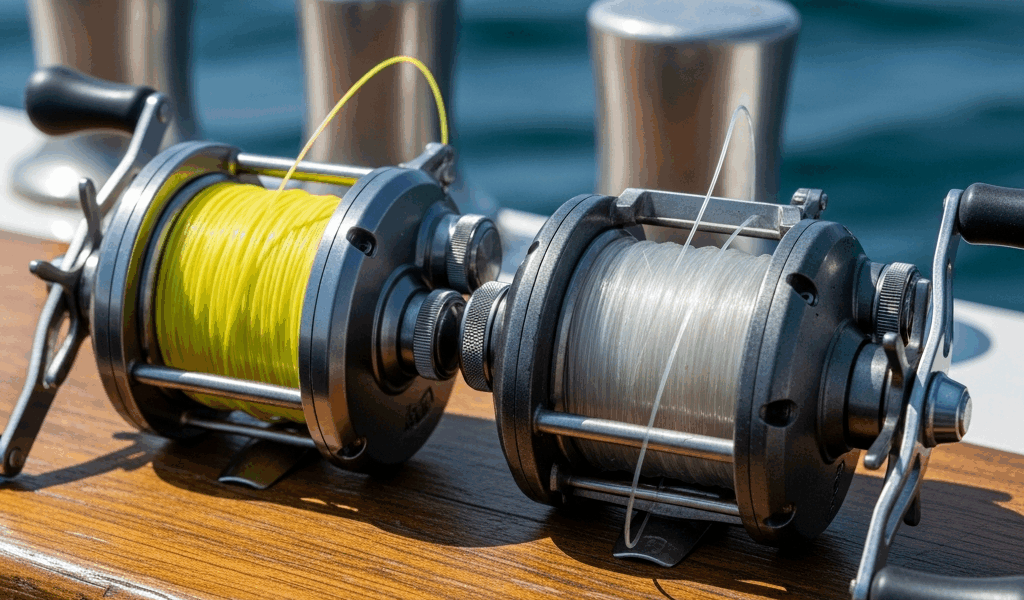
Braided vs Mono for Saltwater — When to Use Each Line
The braided vs mono debate has gotten complicated with all the conflicting advice flying around. As someone who’s fished the Gulf Coast for going on eighteen years — redfish in the marsh, snapper on the ledges, king mackerel off the beach — I learned everything there is to know about this subject the expensive way. Today, I will share it all with you.
But what is the right line choice? In essence, it’s situational. But it’s much more than that. The answer shifts depending on your target species, your structure, your depth, and honestly, how much line you’re willing to lose to a bad decision. I’ve made plenty of those. Don’t make my mistake.
The Short Answer by Fishing Type
Probably should have opened with this section, honestly. If you just want the quick reference and you’ll figure out the why later, here it is.
| Fishing Type | Main Line | Leader Setup | Notes |
|---|---|---|---|
| Surf Fishing | Braid (20–30 lb) | 20–40 lb mono leader, 3–4 ft | Mono stretches on long casts, absorbs wave action |
| Inshore (Redfish, Trout, Flounder) | Braid (10–20 lb) | Fluorocarbon leader, 20–30 lb | Sensitivity wins here — braid all the way |
| Offshore Trolling | Mono (30–80 lb) | No leader needed — heavy mono straight through | Stretch is your shock absorber at speed |
| Bottom Fishing (Snapper, Grouper) | Braid (40–65 lb) | Heavy fluorocarbon or mono, 40–60 lb, 3 ft | Braid gets rigs down fast, less drift |
| Nearshore Jigging | Braid (20–40 lb) | Fluorocarbon leader, 30–50 lb | Feel every jig bounce through the braid |
Print that out. Tape it to your tackle box. Seriously.
Why Braid Dominates Inshore Saltwater
Burned by a bottom bite I nearly missed years ago — I was running 17 lb mono on a spinning rod, dragging a soft plastic through a grass flat — I switched to 15 lb braid the following weekend. Never looked back. The sensitivity difference is not subtle. It hits you immediately.
Braid transmits vibration straight to your hand. When a redfish mouths a DOA shrimp and spits it before you even register the take, that’s mono failing you. With braid, that same bite feels like someone tapping your rod tip with a finger. You feel the tick. You set the hook. Fish on. That’s what makes braid endearing to us inshore anglers.
The No-Stretch Advantage
Mono stretches roughly 25–30% under load. Sounds like a cushion. Inshore, it’s a liability. Working a Zman Ned rig in 4 feet of water when a sheepshead picks up your bait — that stretch eats your hookset before the hook point ever moves. Braid has virtually zero stretch. Your hookset is direct, immediate, mechanical.
I’m apparently a creature of habit, and 10 lb Power Pro Spectra works for me while mono never really did once I made the switch. That was about a decade ago. Haven’t touched mono as a main inshore line since.
Diameter and Line Capacity
This matters more than people realize. Ten-pound braid runs roughly the diameter of 2 lb mono. On a smaller inshore reel — say a Shimano Stradic 2500 — you’re loading 200 yards of 10 lb braid versus maybe 110 yards of 10 lb mono. More line, thinner profile, less water resistance on the retrieve. In tidal cuts and passes with serious current, that thin diameter means your jig actually reaches the bottom instead of kiting uselessly behind the boat.
Casting Distance
Braid casts farther. Full stop. Thinner, slicker, and on a well-lubricated reel, it shoots through the guides without the drag mono creates. On the surf, 20 lb braid on a long rod adds 20–30 yards over equivalent pound-test mono. Those yards can mean the difference between your bait landing in the trough or dying in the wash.
Where Mono Still Wins
Braid is not a miracle line. Specific saltwater situations exist where mono outperforms it — and ignoring those situations costs fish and money. So, without further ado, let’s dive in.
Offshore Trolling — Stretch Saves Fish
Frustrated by blown connections on fast wahoo strikes, most experienced offshore captains figured this one out early. Trolling at 7–8 knots when a fish hits at full speed — the initial strike load is violent. With braid, that shock transfers instantly to the hook, the knot, the rod tip. Something breaks. Line, hook, or lure connection — something goes.
Mono’s stretch acts as a genuine shock absorber offshore. The line gives slightly on the strike, the hook seats more gently, the fish stays buttoned. Most serious captains I’ve fished with run straight 50 lb Ande Tournament mono on their trolling reels. About $25–30 for a 600-yard spool. Not glamorous. Works every time.
Abrasion Near Heavy Structure
Braid cuts on rock, coral, and barnacled pilings like thread over a razor blade. Found this out the hard way fishing sheepshead off a bridge column in Pensacola — lost three solid fish in a row when the braid simply parted on barnacles. Switched to 20 lb monofilament. Landed the next four without a problem.
Fishing tight to structure — dock pilings, jetty rocks, bridge abutments — mono’s abrasion resistance buys you critical seconds. Seconds matter when a fish runs hard for the nearest piling.
Bottom Rigs That Get Cut Off
Cheap bottom rigs — the kind sold 10 for $4 at the bait shop — get cut off on rocks, oyster bars, and crab traps constantly. Running expensive braid to throwaway rigs is financially painful. A spool of 20 lb Trilene Big Game mono runs about $8 and lasts a whole season of disposable bottom setups. First, you should save the braid for rigs worth protecting — at least if you want to avoid an expensive season.
Leader Setups That Actually Work
The leader conversation is where most anglers leave fish in the water. Matching your leader correctly to target species and structure changes catch rates more than almost any other single adjustment.
Fluorocarbon Leader Lengths by Species
- Redfish and Trout (Inshore): 20–25 lb fluorocarbon, 18–24 inches. Enough to fool wary fish in clear water without killing lure action. Seaguar Blue Label 20 lb is my go-to — around $18 for 25 yards.
- Snook: 30–40 lb fluorocarbon, 24–30 inches. Snook run straight for mangroves on the hookset. You need breaking strength and abrasion resistance both.
- Grouper and Snapper (Bottom Fishing): 40–60 lb fluorocarbon or heavy mono, 2–3 feet. Grouper dive for the ledge the second they feel the hook. The leader has to survive that rock edge.
- King Mackerel (Surf/Nearshore): 40–60 lb wire leader, 12–18 inches — or double-strand 80 lb fluorocarbon. Kings bite through fluorocarbon if given enough material to work with. Wire eliminates the question entirely.
- Cobia: 60–80 lb fluorocarbon, 3 feet. Not particularly leader-shy, but strong fish that make hard initial runs near the boat.
FG Knot vs Uni-to-Uni
The FG knot is the strongest braid-to-leader connection available. A well-tied FG tests at or near 100% of the line’s rated strength. I use it for anything over 20 lb braid — offshore applications, tournament situations, big redfish on light line where losing the fish isn’t an option.
The problem is practice. A sloppy FG is actually weaker than a clean Uni-to-Uni. When I first started tying FG knots, I spent two evenings in the garage with a spool of 30 lb braid and spare leader material just running reps until the tag ends came out clean and tight every single time. Two evenings. That’s what it took.
The double Uni is simpler, consistent, and perfectly adequate for inshore fishing and surf applications under 30 lb. Bulks up slightly more through the guides than an FG — but it will not fail you on a redfish or flounder. Learn the FG for offshore. Use double Uni for everything else until the practice is in.
When to Skip the Leader
Offshore trolling with heavy mono as your main line. Period. No leader needed when you’re running 50 lb mono with crimped 80 lb cable sleeve connections at the lure. Adding a lighter fluorocarbon leader to a heavy mono main line creates a weak point for zero actual gain.
Best Brands and Pound Test by Application
These are actual products I use or have used long enough to trust. Not sponsored recommendations. Opinions from someone who has broken enough line to form some strong ones.
Braided Lines Worth Buying
- Power Pro Spectra — 10 lb and 20 lb: Best all-around inshore braid. Smooth, consistent diameter, handles well on spinning reels. Around $20–25 for a 150-yard spool at Bass Pro. I’m apparently a 10 lb guy on 2500 reels, and Power Pro works for me while heavier options never felt right for shallow grass flats.
- Sufix 832 — 30–65 lb: Eight-carrier construction makes it noticeably rounder and smoother than four-carrier options. Better for bottom fishing where you’re loading and unloading in deep water repeatedly. Around $30 for 300 yards.
- Daiwa J-Braid x8 — 40–65 lb: Strong, consistent, casts well on conventional reels. This is what I run on my Penn Squall 30 for grouper and snapper trips. About $28 for 300 yards.
Monofilament Lines Worth Buying
- Ande Tournament Mono — 30–80 lb: The offshore trolling standard. Been around forever. Charter captains run it. That’s the endorsement. A 600-yard spool in 50 lb runs about $28.
- Trilene Big Game — 15–30 lb: The inexpensive workhorse for surf bottom rigs and throwaway setups. A 440-yard spool of 20 lb is about $8. Buy it in bulk at the start of the season and don’t think twice about cutting it off when it gets nicked up.
- Berkley Vanish Fluorocarbon — 20–30 lb: Budget-friendly leader material for inshore use when Seaguar prices aren’t in the cards. Adequate for redfish, trout, and flounder. Not what I’d put in front of a big cobia — that’s Seaguar territory.
Fluorocarbon Leaders Worth Buying
- Seaguar Blue Label — 20–60 lb: The standard. Consistently the best balance of suppleness and strength in fluorocarbon leader material. Costs more. Ties cleanly, holds knot strength, and doesn’t surprise you at the wrong moment.
- Yo-Zuri HD Carbon — 30–80 lb: Slightly stiffer than Seaguar but holds up better near rough structure. Good choice for grouper rigs and snook fishing around mangrove roots where abrasion is constant.
The biggest mistake I see newer saltwater anglers make — and I made it too, early on — is treating line choice like an afterthought. Grabbing whatever’s on sale. Running the same mono they used freshwater last summer. Saltwater is harder on line, harder on knots, and harder on fish connections than anything you’ll encounter inland. Matching your line to your specific application isn’t overthinking it. It’s just doing the job right before you ever leave the dock.

Stay in the loop
Get the latest saltwaterspots.com updates delivered to your inbox.