Why Rigging Matters More Than Most Anglers Think
Live shrimp fishing has gotten complicated with all the conflicting advice flying around. As someone who spent three full seasons targeting redfish in the Georgia lowcountry, I learned everything there is to know about keeping bait alive long enough to actually matter. Today, I will share it all with you.
I used to spend forty bucks on a fresh dozen live shrimp, rig them carelessly, and watch them go limp within fifteen minutes. Every time. The fish could tell — they always can. A dead shrimp gets ignored. A lethargic one does too.
This article includes affiliate links. We may earn a commission at no extra cost to you.
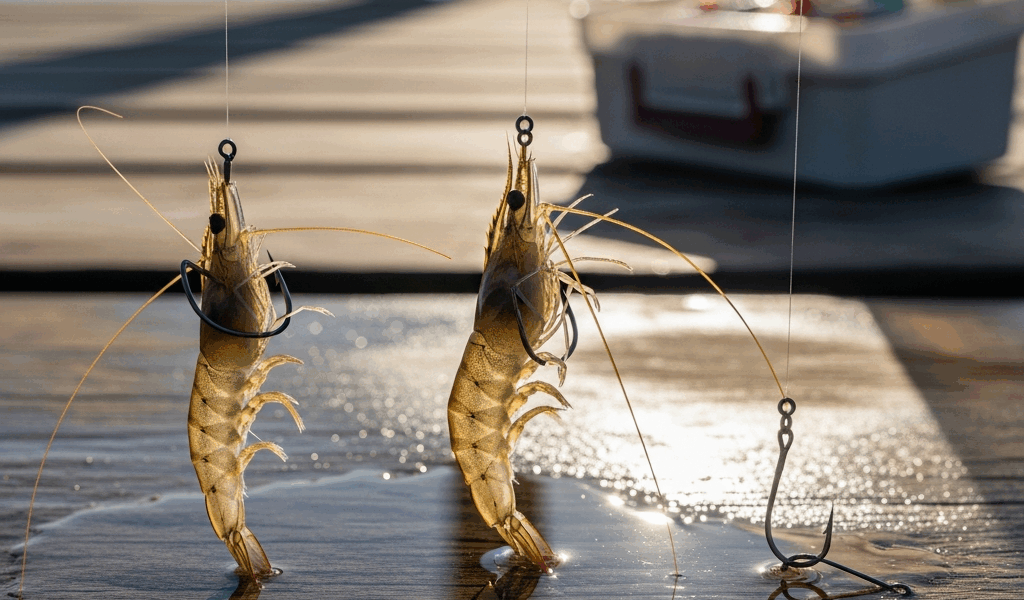
How you rig live shrimp for saltwater fishing isn’t a one-size-fits-all problem. The difference between a shrimp that kicks naturally for forty-five minutes and one that dies in ten comes down to three things: where the hook goes, how deep it sits, and what you’re fishing it under. A well-rigged live shrimp swims in tight, panicked circles. A poorly rigged one just hangs there — dead weight, no matter how lively it looked in the bucket five minutes ago.
Most articles skip the nuance entirely. They say “hook it through the tail” or “behind the horn” and call it done. This one doesn’t. We’re covering the three main rigging methods, the specific mistakes that kill your shrimp before a fish ever sees them, and the troubleshooting logic that keeps bait alive and working. So, without further ado, let’s dive in.
The Three Main Ways to Rig Live Shrimp
Tail Hook — The Distance Player
Threading the hook through the tail works. It also kills your shrimp faster than anything else on this list. The tail hook allows maximum shrimp movement — but that’s actually the problem. The shrimp thrashes violently, exhausts itself, and dies. Fast.
If you’re using it anyway — and plenty of experienced anglers do, especially when free-lining or casting under mangrove roots — insert a 1/0 or 2/0 live bait hook horizontally through the tail, just above the fan. Aim for the meaty part of the tail base. Not the thin, translucent section near the tip. Miss that detail and the hook tears right through, and your shrimp becomes garbage.
The tail hook is best for aggressive species hunting skinny water: tarpon, permit, big jack crevalle. Fast action. Short presentations. It’s a terrible choice for patience fishing under a popping cork where you need the shrimp alive for thirty to forty-five minutes. That’s what makes the tail hook endearing to us inshore hunters — brutal effectiveness in the right situation, useless in the wrong one.
Head Hook — The Anchor Method
But what is proper head-hooking? In essence, it’s placing the hook just behind the horn — the small spike between the eyes — to anchor the shrimp without hitting the brain sac. But it’s much more than that.
Position the shrimp upside down in your palm. Wet hand — this matters. Look for the horn. You want the hook to enter just behind it, angling slightly downward into the body cavity, exiting just before the first leg. A 2/0 circle hook or 1/0 J-hook works here. The shrimp stays anchored but can still swim, kick, and pulse. Done right, it’ll stay alive forty to forty-five minutes — assuming the water temperature cooperates.
Head-hooked shrimp under a popping cork is the gold standard for redfish, snook, and permit in clear, shallow water. The bait hangs naturally. It looks like a shrimp trying to hide. Not a shrimp on life support.
Common mistake: hooking too deep into the head. You’ll feel resistance, assume you’ve found the right spot — and you’ve actually driven the hook through the brain sac. The shrimp dies instantly. Hard stop. You’ll notice it goes rigid for a second, then just hangs limp. Don’t make my mistake.
Collar Hook — The Compromise
Some call it the carapace rig. You’re hooking just behind the shell, in the collar area between the head and first body segment. Insert a 2/0 hook upward through this spot, keeping it shallow — the point should barely break skin.
This method balances durability and lifespan. The shrimp stays alive twenty to thirty minutes. Longer than the tail rig, but not quite as long as the head hook. It works well on jig heads — the shrimp’s weight distributes better — and it’s forgiving on accuracy. Miss the sweet spot by half a millimeter and the shrimp usually survives anyway.
Use the collar rig for bottom work, light jig heads in the 1/8 to 1/4-ounce range, and deep structure fishing where you need the bait down quickly. Flounder, grouper, small snapper — species hunting by scent that don’t need a shrimp doing gymnastics for forty-five minutes straight.
Under a Float vs. Free-Lined vs. Jig Head
The delivery method forces your rigging choice. This is the part nobody explains clearly — and it’s honestly where most people go wrong.
Under a popping cork or stationary float, use the head hook every time. The shrimp needs to hang naturally and swim downward. Cork rigging is patient fishing. You’re not casting far. You’re working a small zone over and over, and the shrimp needs to stay alive for an hour or more. Head hook. No debate.
Free-lining — casting without weight or float — works with either tail or head hooks depending on depth and distance. Tail hook if you’re hunting aggressive fish in shallow, snappy cover. Head hook if you’re working deeper and need the bait alive longer. The shrimp stays in the strike zone longer that way. Simple.
Jig heads are harder on live shrimp. Full stop. The constant vertical movement, pressure changes, repeated bottom contact — it all stresses the bait fast. A shrimp on a 1/4-ounce jig head might last ten to fifteen minutes before it goes limp. Use the collar or tail hook for jigs, accept the shorter lifespan, and go lighter when you can. A 1/8-ounce jig keeps the shrimp alive five minutes longer than a 1/4-ounce. That five minutes is real money in shallow water.
Hook Size, Style, and When to Use Circle Hooks
Probably should have opened with this section, honestly. Most anglers oversize their hooks — I did it for two full seasons before a guy at a boat launch in Brunswick, Georgia finally called me out on it.
A 3/0 or 4/0 hook kills shrimp faster and tanks your bite ratio. Live bait hooks in 1/0 and 2/0 are correct for most saltwater shrimp work. Thin-wire, sharp, sized for the actual bait you’re presenting. That’s it.
Circle hooks might be the best option under popping corks, as shrimp fishing under a float requires patience over speed. A 2/0 circle reduces gut-hooking and works exceptionally well with the head-hook rig. The offset design hooks the corner of the mouth naturally as the fish swims away — fish hooked on circles survive catch-and-release better, and that matters on public water.
J-hooks are the workhorse for bottom rigs and jig head work. They penetrate fast and hold solid on the strike. Size them to 1/0 or 2/0 for shrimp. I’m apparently a 2/0 guy and the Gamakatsu Octopus style works for me while oversized J-hooks never seem to sit right on smaller shrimp.
Kahle hooks split the difference — stronger than circles, more natural than J-hooks. Undersized Kahles, even a 1/0 or straight 1, work beautifully on very small shrimp or when clear water demands a smaller profile.
Keeping Shrimp Alive in the Bucket and on the Hook
Everything before this section fails if your bucket is quietly killing the shrimp before you even rig them.
Use an aerator. Not a bubbler — an actual aerator that pulls fresh water across a blade or wheel. Battery-powered models run twenty to forty dollars and work six to eight hours on four AA batteries. The Marine Metal B-11 Bubble Box runs about $18 at most tackle shops and keeps a five-gallon bucket oxygenated all day. Bait bucket aerators aren’t optional. They’re baseline.
Keep the water below seventy degrees. When air temperature hits eighty-five or higher, shrimp die fast in a static bucket. Swap water every twenty minutes if you’re not running an aerator. Never overcrowd — a dozen shrimp need at least five gallons minimum. Twelve shrimp in two gallons is just a slow death sentence.
Handle shrimp with wet hands only. Dry hands strip the protective slime coat and stress the nervous system. Grab, rig, and release to the water in under ten seconds. Frustrated by watching expensive bait die before it ever saw a fish, I started keeping a separate shallow tray of bucket water right next to my casting position — cuts handling time in half.
Check the bucket every ten to fifteen minutes. If shrimp are going limp, re-rig the living ones immediately. A lethargic shrimp on the hook catches exactly nothing. Pull it and replace it while you still have fresh bait. This new habit took hold several years into my inshore career and eventually evolved into the disciplined bait management routine serious redfish anglers know and rely on today.

Stay in the loop
Get the latest saltwaterspots.com updates delivered to your inbox.